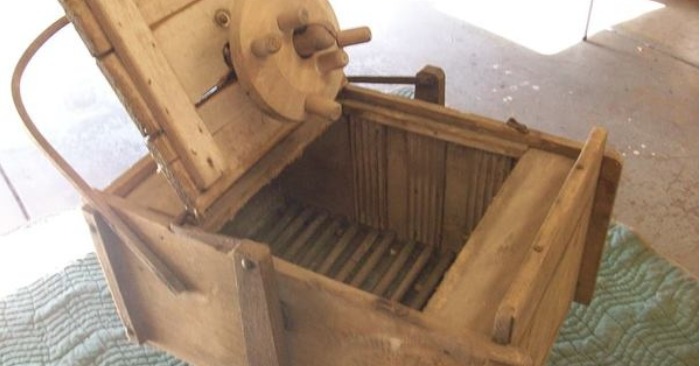
For years, it simply sat there, quietly gathering dust. It had been passed down through the family, rarely questioned and never fully understood. To most people, it was just “that old thing” in the corner — something no one gave much thought to, until curiosity finally took over.
The owner always knew it had some kind of history. The worn wood, the sturdy craftsmanship, and the unmistakable feeling of an object made in another time all suggested it was more than ordinary clutter. But what exactly was it? And more importantly — could it actually be worth something?
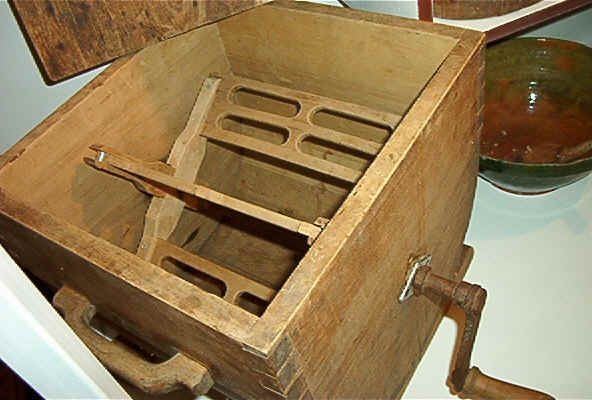
What they had in their possession was a vintage manual washing machine dating back to the early 20th century. Before electricity changed daily household routines, machines like this played an important role in family homes. Doing laundry was not as easy as pressing a button — it required strength, time, and real physical effort.
This specific piece is known as a rocker-action washing machine, made by The Anthony Wayne Manufacturing Company in St. Louis, Missouri. In its day, it was considered an improvement in home laundry work, helping make the washing process more effective without depending completely on hand scrubbing.
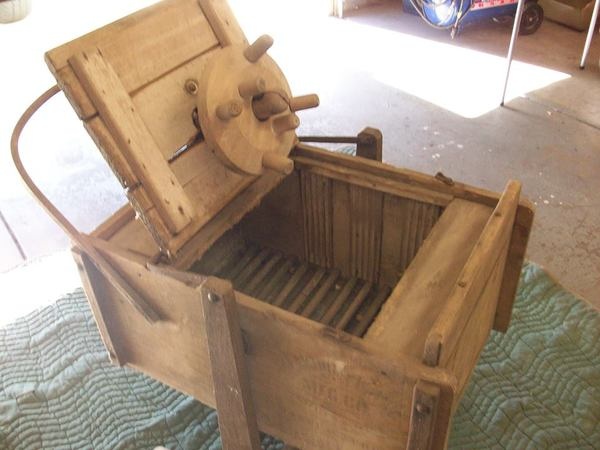
The construction is more ingenious than it may first appear. Made primarily from wood, it contains an interior mechanism — often fitted with ridges — that moves the clothing as the handle is turned. Rather than scrubbing every garment entirely by hand, the user could rotate the machine and allow the rocking motion to do part of the labor.
Before electric washing machines became common, devices like this could be found in many households. They capture a period when practical invention was aimed at reducing hard work without the help of modern technology. Today, this old machine serves as a clear reminder of just how dramatically ordinary household chores have changed.

When it comes to value, items like this can be appealing to collectors, especially those interested in early household equipment, antique laundry tools, or Americana. The exact worth depends on factors such as condition, whether all original parts are present, and current collector demand. Still, it is certainly not just an old forgotten object — it is a physical piece of domestic history.
Sometimes, the most ordinary-looking things are the ones with the most fascinating stories behind them.