When Monica helps a stranger at the supermarket, she expects nothing more than a grateful smile. But what begins as a simple gesture quietly awakens something within her that she never saw coming—it tears open the future she had long since resigned herself to and grants her a second chance.
Two days before payday, with only $27 left in my account and a toddler clinging to my hip, I stood at the checkout counter, silently begging the universe to grant me a little mercy.
Just five minutes of peace, I thought. No tantrums, no surprises.
But Owen, of course, had other plans.
He wriggled in my arms and reached for the candy aisle with the determination of someone twice his age. His little fingers stretched toward the sour gummy worms, and in his eyes flashed that mischievous glint I knew all too well.
“No, buddy,” I whispered, lifting him higher onto my hip. “Don’t even think about it.”
My son looked at me—big brown eyes, feigned innocence.
“But they’re sour worms, Mom,” he said, pouting.
I sighed. It was one of those evenings that creeps up on you slowly and heavily, leaving you feeling both exhausted and on edge. One of those evenings when your back aches from carrying too much—not just the weight, but everything—and your head is buzzing with caffeine and worries.
I would have loved to give my son free rein in the store. If it were up to me, he could run through the candy aisle and take whatever he wanted. But the reality was: we still had 48 grueling hours to endure until my paycheck arrived, and my debit card had already beeped a dramatic “no” one too many times at the gas station.
I gave Owen my best “not today” look, and he chuckled and dropped his hand.
“Next time, I promise,” I murmured—not even sure if I was saying it to him or to myself.
An older woman, perhaps in her late seventies, stood before us. Her hair was pulled back in a soft bun, silver strands curling around her ears. She wore a pale green cardigan that looked well-loved: stretched at the elbows, marked by years of wear.
Her shopping cart wasn’t full. Just the essentials, the kind I knew all too well: bread, milk, a couple of cans of soup, a bag of potatoes—and a small apple pie. The kind with a sugar-dusted crust that instantly reminded me of autumn and my grandmother’s kitchen.
She watched the screen intently as each item was scanned. Her lips moved slightly, as if she were silently counting. I saw the tension in her shoulders, the way she gripped her handbag tightly, as if something were hanging from it.
When the total appeared, she paused. Not for long, just a moment—but long enough for the air in the room to shift.
Then she reached for her card.
The cashier, a teenager with smudged eyeliner and chipped nail polish, barely looked up as she took it. The machine beeped once.
Declined.
“Oh no,” the older woman said. “Maybe I entered the wrong code.”
She tried again, this time more slowly.
Declined again.
Someone behind me sighed loudly.
“For heaven’s sake,” a man mumbled.
“For heaven’s sake,” a man muttered. “There’s always someone.”
Another voice chimed in, sharp and impatient.
“If you can’t afford groceries, what are you even doing here? Go to a soup kitchen or something.”
The woman’s face turned red.
“I can put the cake back,” she told the cashier. “It’s not important.”
My heart sank. Owen slid onto my hip, his arms around my neck. This cake was probably a small indulgence she’d allowed herself. A single sweet moment, a way to wrest a little light from life. For Owen and me, in a week like this, it would have been a small glass of pudding.
“Don’t worry,” I heard myself say, louder than I intended. “I’ll take care of it, Ma’am.”
She turned to me, startled.
Her eyes glittered—eyes that had seen a long life and far too many moments like this.
“You really don’t have to, love,” she said softly. “I’ll be fine.”
“Please, let me,” I said, pulling my card from my pocket.
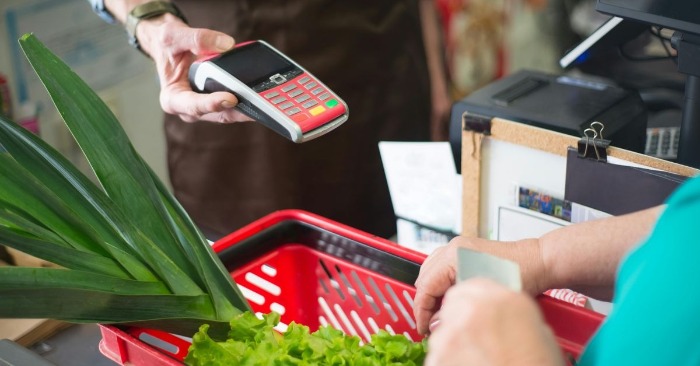
The cashier raised an eyebrow but said nothing as I paid contactlessly.
The woman looked at me as if I had given her something far more precious than just food.
“Thank you,” she whispered. “You have no idea what this means. But… I can return it to you, I promise.”
“Please, just keep it,” I said, gently brushing the thought aside.
Owen, always observant, waved his tiny hand at her.
“Bye, Grandma! Have a nice day!” he called out cheerfully.
He must have gotten that from me. I say it to him every morning at daycare—mostly out of habit. But when the old woman smiled through her tears and waved back at him, those words suddenly felt sacred.
“You too, sweet boy,” she said, her voice thick with gratitude.
She walked slowly out, the cake clutched tightly to her chest, and the line behind us moved forward again—impatient, indifferent, already beginning to forget everything.
Two days later, I was back in the same store. Owen held my hand and dragged my feet as we walked through the automatic doors.
“Mom, can I have chocolate milk?” he asked, already pointing toward the refrigerated section.
“Yes, but only if it’s on sale,” I replied. “And do you know what that means, Owen? It means there has to be a red sticker on the price.”
BUT HE WASN’T REALLY LISTENING TO ME.
But he wasn’t really listening to me. Instead, he made a small noise and stopped abruptly, stopping us both.
“Wow! Mom, look!”
Right by the entrance, next to the bulletin board with neighborhood notices and missing pets, was a cardboard cutout. My face was printed on it on glossy paper—my messy bun and Owen’s grin immediately gave it away.
The picture was clearly a still from the security camera. A handwritten note was stuck over it:
“Please call me. You helped my mother, and we want to thank you.”
For a moment, everything inside me tensed. I felt… exposed. As if someone had taken a private gesture and displayed it for everyone to see. The help I had offered without thinking suddenly seemed strangely public.
I went straight to customer service. A man named Rick, the branch manager, came out when someone asked for him.
“I’m sorry, Monica,” he said quickly after I introduced myself. “The man was here yesterday and explained the situation. We showed him the material, and he asked if we could display it. It was meant as a kind gesture, so I gave permission.”
“I understand,” I said, even though I didn’t really get it. “But I’d like to take it down, okay?”
“Of course,” he said. He pulled the poster off the board and handed it to me.
Owen took it from my hand and grinned at it as if it belonged in a museum.
Nevertheless, that evening, as Owen fell asleep on the sofa—his nearly empty chocolate milk bottle still clutched in his hand—I sat beside him with the poster on my lap.
The number, written in black pen, practically called out to me.
I dialed it.
“Hello?” a man’s voice said after the second ring.
“Hi,” I said, already sounding more defensive than I intended. “I saw my picture on a poster in the supermarket. Why would you do that? You can’t just hang up someone’s face without permission.”
There was a pause, then his voice softened—with relief.
“Wait… are you the woman with the little boy? The one who paid for my mom’s groceries?”
“Yes,” I said hesitantly. “Apparently, that’s me.”
“She talks about you nonstop. And your boy. Please… would you be willing to meet us? She’d like to thank you properly.”
Something about his manner disarmed me. It didn’t sound rehearsed, not insincere. It was gentle and respectful. Against my better judgment—and perhaps also because his voice felt somehow safe—I agreed.
We met the next day in a small café just down the street from the supermarket. Such a cozy place, with mismatched cups and hand-painted chalkboards, smelling of cinnamon and fresh bread.
Owen sat next to me on the bench, dangling his legs and devouring a muffin as if it held the answer to life.
About fifteen minutes later, the woman from the shop came in, this time wearing her soft blue cardigan neatly buttoned up and with a warm smile on her face.
Next to her stood a man I had never seen before—and yet something about him felt familiar even before he sat down.
“Oh, my love!” the older woman said, leaning across the table to hug me. “You’ve come!”
“Thank you for meeting with us,” the man said, extending his hand to me. “I’m John, and this is my mom, Margaret.”
“I’m Monica,” I said, shaking his hand. “And this little muffin devourer is Owen.”
Owen glanced up briefly, his face covered in crumbs.
“Hi,” he said cheerfully, his voice muffled from eating.
“HI, BUDDY,” JOHN LAUGHED.
“Hi, buddy,” John laughed.
They sat down opposite me, and for a brief moment, no one spoke. It was a gentle silence—the kind that arises when strangers are no longer complete strangers, but not yet something else entirely.
“My mom told me a lot about you,” John began. “She doesn’t have any financial problems. She’s just…frugal. Always has been. And she gives away a lot of what she has.”
Margaret nodded, her hands neatly folded on the table.
“That day at the supermarket, Monica, my card expired,” she said. “I hadn’t even noticed. When the people in line said those things, I felt… ashamed. More than I wanted to admit.”
Her voice wavered. I could see how deeply it had affected her. That helplessness, that public humiliation. I knew the feeling all too well.
“But you reminded me that kindness doesn’t disappear,” she added, looking at me with tears in her eyes. “You didn’t just help me, my dear. You made me feel seen.”
“I didn’t do it for attention,” I said, swallowing hard. “I just didn’t want you to feel small. Nobody deserves that. I know that.”
Margaret reached across the table and gently placed her hand on mine.
“And that’s precisely why,” she said, “I want to give something back. Kindness like that shouldn’t go unanswered.”
Then came the part that took my breath away.
“This little one called me Grandma, and it’s been on my mind, Monica,” she said. “So I’d like to open a savings account in Owen’s name. We can start with $10,000. For his future.”
“Wait—what?!” I gasped.
“It’s not charity, please don’t misunderstand me. It’s gratitude.”
“I can’t… I can’t accept this.”
“Yes, you can,” she said. “Because he deserves a better start in life. We can help him get that start.”
I didn’t want to cry. But the tears came quickly. Margaret’s voice, gentle yet firm, touched something inside me that I hadn’t allowed myself to feel in a long time: relief.
After coffee, John offered to drive us home.
“We don’t live far,” I said. “We can walk.”
“Yes, we can,” he said, and ordered another muffin for Owen to go.
We talked the whole way. Not just casually, but really. Margaret held Owen’s hand, and they talked about daycare.
“My wife left six months ago,” John said suddenly. “She met someone else and broke my heart. Since then, I spend more time with my mom – catching up on what I’ve missed and making sure she’s okay.”
I looked at him and smiled sadly.
“My husband left when Owen was a year old. He said he needed space, but later I found out he’d already been seeing someone else while I was pregnant.”
“I’m sorry,” John said simply.
And somehow that was enough—somehow, through this shared pain, something calm and solid began to grow.
Coffee breaks turned into dinners and ice cream dates with Owen. My son adored John. And slowly, so did I.
Margaret was thrilled, of course. I think she’d hoped for it all along, even if she never said so out loud. She had this quiet way of putting things in their proper place. Never pushy, never obvious—but now I see it.
The way she lit up when John and I laughed at the same joke. And the way she always made plenty of food, as if the four of us were already a given.
“You know,” she said one afternoon as we sat in her garden, “I saw it in John’s eyes, the moment he looked at you. He didn’t say anything, of course not. But I know that boy well enough.”
“I think I knew it too,” I said, looking at Owen, who was running barefoot through the grass. “It was… something about his voice. I just didn’t want to trust it right away.”
She squeezed my hand gently.
“Trust is earned, Monica,” she said. “You did the right thing by waiting.”
A year after that day in the supermarket, John and I got married under the big oak tree in Margaret’s garden. It was simple, quiet, and full of people who truly mattered. Owen wore a tiny dark blue bow tie and held the ring pillow tightly in his arms throughout the ceremony, as if it were a treasure, grinning the whole time.
Three months later, John officially adopted him.
“Does that mean I can call him Dad now?” Owen asked.
“You already do, sweetheart,” I said.
And now, every night when I put Owen to bed, he still talks about that first day.
“Mom, do you remember when we met Grandma Margaret at the store?”
I nod every time, the smile already there before I can stop it.
“Of course I remember,” I say.
Because what began with an apple pie, a trembling voice, and a quiet gesture of kindness turned into something I never would have expected: the beginning of a second chance. A better one—for all of us.