My son called me from an unknown number and asked why I left him.

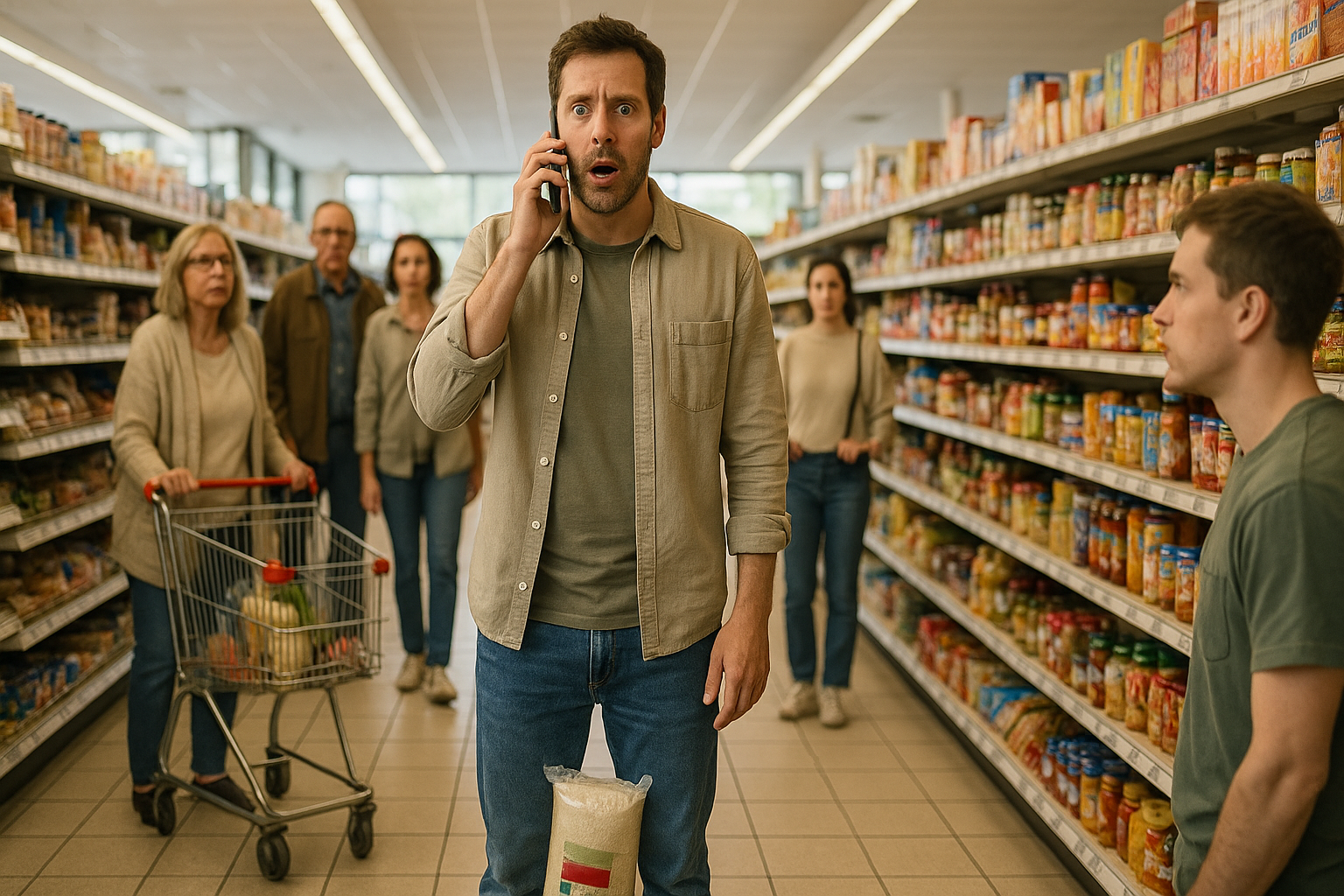
I was standing in the supermarket, holding a pack of rice, when the phone rang. Unknown number. I almost rejected the call. Then I heard a boy’s voice: “Is this Daniel Carter?”
I said yes, thinking it was a bank or some survey. The boy was quiet for a second. Then: “My name is Lucas. Mom says you’re my father.”
The rice fell out of my hand. I heard it hit the floor. People turned to look at me. I just stood there with the phone pressed to my ear. I don’t have children. At least that’s what I always thought.
I stepped out of the line and walked toward the exit without saying anything. The boy kept talking. Very calmly, like he had rehearsed. “I’m twelve. I got your number from Mom’s old emails. Please don’t hang up.”
On the street it was loud, buses, cars, someone arguing nearby. His voice was the only clear sound. “Why did you leave us?” he asked. Not angry. Just like he needed the information.
I said the first thing that came to my mind: “Where is your mother?” He answered immediately: “At the hospital. She’s sleeping a lot. The doctor says she’s tired.”
I asked his mother’s name. When he said “Emily”, my legs actually shook. I leaned on the wall of the supermarket. Emily. We dated at university. Broke up when we were twenty-four. I moved to another city. We never talked again.
I remembered one fight, one late period, one sentence: “Don’t worry, it was a false alarm.” Then exams, job, new city. I filed that memory under “drama” and never opened it again.
Now a twelve-year-old boy was breathing into my phone. “Mom showed me your old photos,” he said. “She said you were busy and far away. But I’m old enough now. I just want to know if you left because of me.”
I sat down on the curb. My trousers got wet from a puddle. I didn’t care. “Lucas, I didn’t know,” I said. The words felt weak and stupid. “I didn’t know you existed.”
He was quiet for a long time. I thought the connection dropped. Then he whispered: “So if you had known… would you have stayed?”
Cars passed. Someone laughed behind me. My mouth was dry. I realized I couldn’t give him the answer he needed. Not an honest one. Back then, at twenty-four, with my fear and my selfish plans, I probably would have run anyway.
I said, “Yes. I would have stayed.” The lie left my mouth too easily. It sounded nice, correct, grown-up. On the other end he took a small shaky breath. “Okay,” he said. “Thank you.”
I asked for the name of the hospital. He gave it to me without hesitation, like he had planned that too. Then he added, “Mom doesn’t know I called. She thinks you’re better off. But she cries when she thinks I’m asleep.”
He sent me the address by text. No emojis, no extra words. Just the address and his name. “Lucas.” I stared at the screen for a long time. My reflection in the glass door of the supermarket looked like a stranger.
In the evening I told my wife I had to work late. I sat in the car outside our apartment building for almost an hour, engine off, holding the steering wheel. We don’t have kids. After two miscarriages, we stopped trying. We said we were fine.
I drove to the hospital with my hazard lights on most of the way and only noticed it when I parked. The receptionist told me the floor and room number like I was just another visitor.
In the corridor everything smelled like antiseptic and overcooked vegetables. I saw him before he saw me. A thin boy in a too-big hoodie, sitting on a plastic chair, swinging his feet above the floor, staring at his phone.

He looked up because he heard my steps. Our eyes met. His face changed in a strange way: not joy, not surprise. More like recognition of a fact he already knew. He put the phone in his pocket and stood up.
“Hi,” he said. Up close he had Emily’s eyes. And my chin. It was like looking at an old photo that someone had edited.
I said hi back. We didn’t hug. We just stood there, both awkward, both pretending we knew what to do. He pointed at the door. “She’s sleeping. They gave her something. They say it’s… complicated.” He stumbled on the last word, copying how the doctors probably spoke.
Through the half-open door I saw Emily. Grayish skin, tubes, her hair cut short. She looked older than me, even though we were the same age. She hadn’t seen me yet.
Lucas watched my face. “You can go in,” he said. “She talks about you when she’s half asleep. Don’t tell her I called, okay?”
I stepped to the door, then stopped. In that moment I saw the line of my life like a map: the move to another city, the jobs, the nights out, the quiet dinners with my wife. And this parallel line, running beside it for twelve years: Emily working two jobs, school meetings, doctor visits, a boy waiting at the window.
I realized I wasn’t just late. I was a stranger at the end of a story that had already cost them too much.
I didn’t go in.
I turned back to Lucas. He looked confused. I put my hand on his shoulder, lightly, like you do with someone else’s child. “Your mom needs rest,” I said. “I won’t make it harder.”
He swallowed, then nodded like an adult. “Will you call me?” he asked. No drama. Just logistics.
I saved his number under “Lucas” and showed him the screen so he would believe me. “I will,” I said. This time it wasn’t a lie. I understood that calling was the only thing I could still do without breaking another life.
On the way home I deleted the hospital address from my messages but kept his contact. At a red light I opened our chat. One message from him had arrived while I was driving: “Thank you for coming. Now I know you’re real.”
I stared at that sentence until the car behind me honked.
At home my wife asked how work was. I said, “Busy.” Then I went to the bathroom, locked the door, and finally allowed myself to cry, quietly, with the water running so she wouldn’t hear.
The next morning I sent Lucas a picture of my breakfast and wrote: “Good morning. What are you eating?”
He answered three minutes later with a photo of a hospital vending machine sandwich and a thumbs-up.
That was the first day I acted like a father to a child who had already learned to live without one.