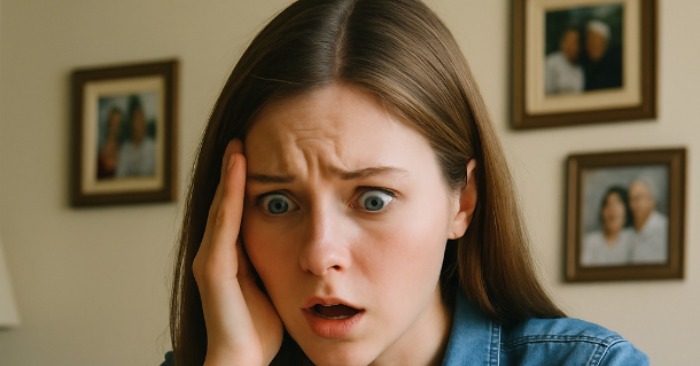
Lena wasn’t looking for secrets when she spat into the plastic tube. It was just a silly Christmas gift from her coworkers—a DNA ancestry kit. Everyone in her office had taken one, joking about who would discover they were “1% Viking” or “related to royalty.”
She mailed it back, forgot about it, and moved on.
Until the email arrived.
Her results showed something impossible: she was a genetic match to a child who had gone missing more than 100 years ago.
The report listed “significant DNA overlap” with an unidentified female whose bones had been discovered decades earlier in an unmarked grave outside Boston. That child was believed to be one of the lost Millbrook Orphans—a group of children who vanished in 1919 after a mysterious fire destroyed their orphanage.
Historians had debated for years what happened to them. Some said they died in the flames. Others whispered they had been kidnapped for secret experiments during the influenza pandemic.
Now, according to the test, Lena was a direct descendant of one of them.
But how?
Her family had never lived anywhere near Boston.
Curiosity became obsession. Lena pored over archives, old newspapers, census records. Her grandmother’s birth certificate suddenly looked suspicious—her “parents” were listed, but the dates didn’t line up.
One night, digging in her grandmother’s attic, Lena found a trunk. Inside were scraps of clothing marked with numbers instead of names, old photographs of children lined up like soldiers, and a burned silver locket with initials she didn’t recognize.
Among them was a letter. Faded, brittle, but still legible:
“To whoever finds her—keep her safe. They will never stop looking. Change her name. Hide her past. She must never return to Millbrook.”
Lena’s chest tightened.
Her grandmother hadn’t just been an orphan. She had been one of the missing children.
But there was more.
The DNA company contacted Lena again, this time not through an automated email, but with a phone call from a “special researcher.” The woman on the line sounded tense.
“You may not realize this, but the Millbrook case is still under investigation. Some records were sealed by the government. The children weren’t just abandoned—they were part of a program.”
“A program for what?” Lena asked, her voice shaking.
The line went silent for too long. Finally, the woman whispered: “It wasn’t about adoption. It was about experiments. Tracking immune systems after the flu pandemic. Your grandmother may have been… one of the survivors.”
Lena felt the floor tilt beneath her.
If that was true, then her entire family line—her—existed because her grandmother had been taken into something darker than an orphanage fire.
The next morning, Lena received another message. This one wasn’t from the DNA company.
It was an unmarked envelope left on her porch. Inside was a single sheet of paper with block letters typed on it:
“Stop asking questions. The past is buried for a reason.”
That night, Lena sat with the locket in her hand, staring at the faintly burned initials: M.O. Millbrook Orphans.
The DNA test had given her more than heritage. It had opened a door into a century-old cover-up that still had keepers in the shadows.
And as she blew out the candlelight in her grandmother’s attic, one thought chilled her:
If someone had tried to erase the Millbrook children from history, what would they do to her for bringing them back into the light?