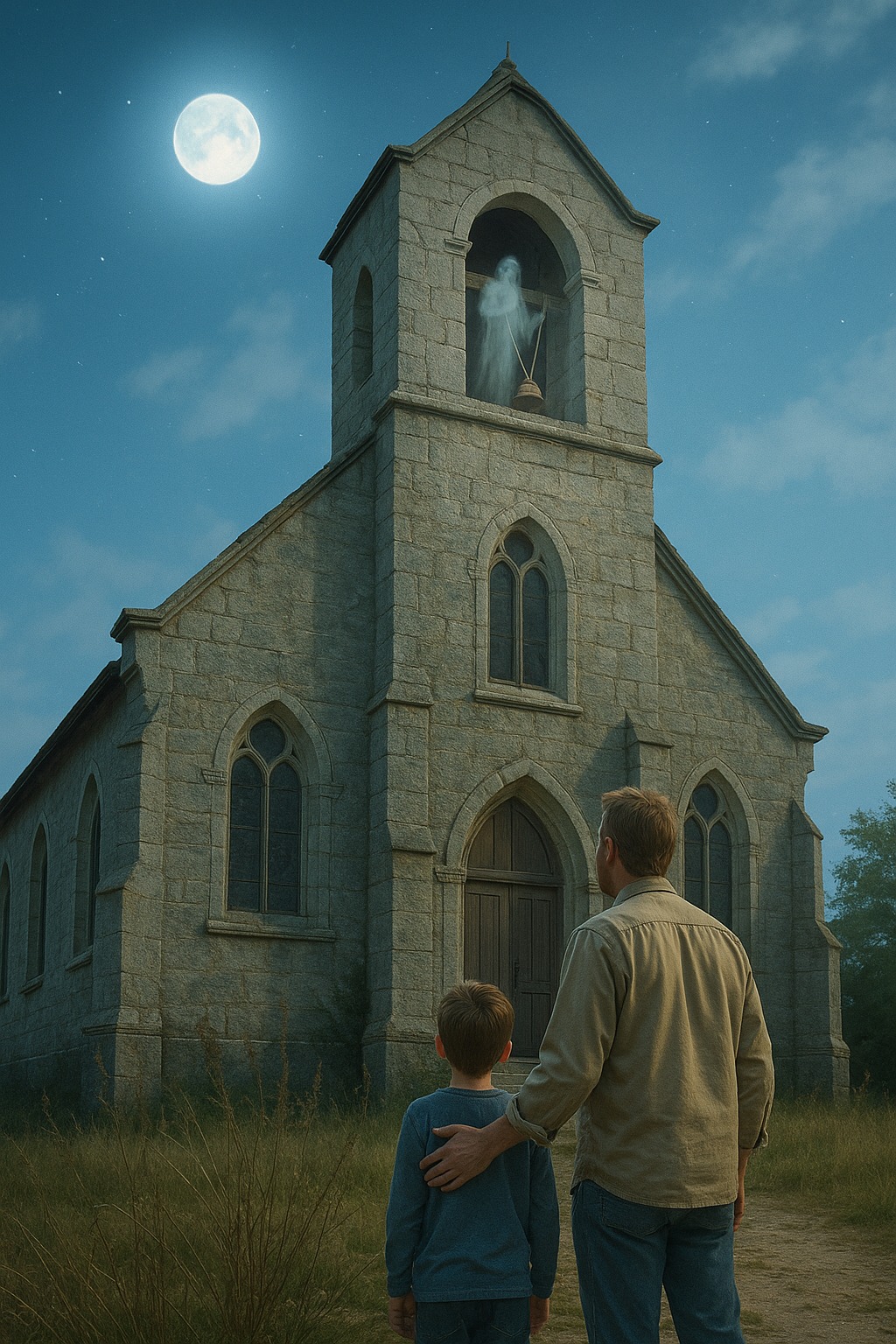
In the small town of Ashford, the church stood like a skeleton at the edge of the square. Its steeple leaned slightly, its stained-glass windows were shattered, and vines crept up the stone walls. No one had entered in half a century.
The doors had been locked after a fire blackened the interior, and time had done the rest. The bell tower was cracked, its rope frayed, its clapper long rusted in place. For fifty years, silence hung over it like a shroud.
Until one stormy night.
Eleanor, who had lived in Ashford her whole life, woke to the sound of it.
A clear, solemn toll.
The church bell.
She sat upright in bed, heart hammering. She knew it was impossible. The bell hadn’t rung since her parents were children. Yet the sound carried through the night air — deep, resonant, undeniable.
The next morning, the whole town buzzed with whispers. Some said it was a prank. Others muttered about vandals. But Eleanor saw the way the older townsfolk avoided meeting each other’s eyes. They remembered the stories.
The church, they said, had been cursed.
Decades ago, when the fire tore through its rafters, a group of townspeople had been trapped inside. No one knew how it started — only that the blaze spread fast. Some claimed they saw a figure in the tower that night, a shadow pulling the rope as the flames consumed the pews.
The bodies were never recovered.
And since then, the church had been abandoned.
Eleanor couldn’t shake the sound from her mind. The next night, she stayed awake, staring at the clock.
At exactly midnight, it began again.
The toll was slow, mournful. Each strike of the bell seemed to rattle through her bones. She opened her window and looked toward the church. In the darkness, she swore she saw movement in the tower.
The shape of a man.
By morning, she had made up her mind. She called her brother Daniel, who had left town years earlier, and convinced him to come. “I heard it with my own ears,” she insisted. “Something’s happening.”
Together, they walked to the church that evening. The doors were warped and chained shut, but the chain hung slack, as though someone had tampered with it. Inside, the air was heavy with soot and damp.
Their flashlights swept across rows of charred pews and blackened stone. Cobwebs hung like curtains. Yet the floor was covered in something new — footprints, pressed deep into the ash.
They led toward the staircase to the bell tower.
Daniel hesitated. “We shouldn’t be here.”
But Eleanor pressed on, climbing the narrow steps. Her light caught the frayed rope dangling from the ceiling.
And then she froze.
The rope was moving.
It swung back and forth, as if freshly released. Above, the bell groaned, its iron clapper scraping against the side.
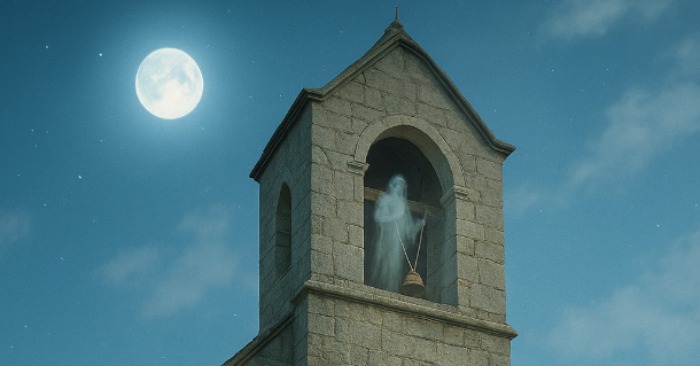
And standing beside it — or rather, through it — was a figure.
A man, his outline blurred like smoke, his hands locked on the rope. His face was pale, his eyes hollow, his mouth moving soundlessly as the bell shuddered and tolled.
Eleanor gasped. The figure looked down at her — and in that instant, she felt it.
Not malice.
Grief.
When she stumbled back, Daniel grabbed her arm. “What did you see?” he demanded.
She struggled to find the words. “He isn’t ringing it for us. He’s ringing it because he never left.”
They fled the church, the sound of the bell chasing them into the night.
By dawn, the bell fell silent again. But the town would never forget.
Some residents insisted it was vandals or wind or coincidence. But the older townsfolk knew better. They whispered that the souls lost in the fire had never escaped. That the tolling at midnight was their reminder — a call for the living to remember the dead.
And Eleanor?
Every time the clock strikes midnight, she listens.
And in the silence between the hours, she sometimes hears a faint echo — a bell that no longer exists, rung by hands that never stopped.