When my father, Richard, passed away last year, it was as if the world had tilted. I was twenty-eight, yet I felt like I had instantly fallen back into being a child: everything inside me emptied, even the air seemed harder to breathe. I didn’t just lose my parent — I lost my anchor.
My father wasn’t the distant, “classic” father figure. He was my support, my friend, my teacher, the person who always noticed when the weight on my shoulders was too much. He didn’t love with expensive gifts, but with small, heartfelt gestures: handwritten notes under my mug or that phone call that started with, “I just wanted to hear your voice.”
Even in difficult times, he never complained. When money was tight, he didn’t grow bitter. Instead, he came up with something that made even the gray days feel a bit like a celebration. Sometimes, he’d just put me in the car at night, roll down the window, turn up the radio, and we’d drive wherever the road took us — as if he were trying to chase away the weight of silence.
I was studying at university, while taking shifts at a small gas station shop to make ends meet. During those times, my father would often show up at my tiny apartment with a takeout box in one hand and a tired smile in the other.
“You can’t think on an empty stomach, sweetheart,” he’d say, setting the food down, then giving me a hug that always lasted one second longer than I expected.
Then he got sick, and our relationship deepened — but everything became more brutal. At first, he was just tired, the kind of exhaustion that makes you say, “You need rest.” Then came the tests, the sterile smell of waiting rooms, the hospital corridors, the long stays where the days blended together.
My sister, Emily, visited maybe twice. Even then, she stood at the edge of the bed, one hand on her phone, her gaze already half elsewhere. She always had an excuse.
“I’m working, Nadia, you know how it is…”
“Hospitals annoy me, I’ll go when he’s home…”
“I can’t take this, it’s too much for me…”
The reality was simple: she didn’t want the responsibility. I was living in it all. I juggled my last semester, work shifts, bills, and caregiving. Morning turned to night: assignments, shifts, appointments, cooking, medications, and sitting by my father’s bed when the pain kept him from sleeping. Meanwhile, my mother, Misha, was often with Emily because “Emily really needs her right now.”
It was exhausting, but I never regretted a single moment. Because in the quiet, small moments, my father squeezed my hand.
“You give me strength, Nadia. And you’re stronger than you think,” he whispered.
Sometimes he told old stories, sometimes he talked about what it was like when he first became a father and was afraid he wouldn’t be good enough. That’s when I understood: caregiving isn’t just about the body. His memories, his life, rested with me, and I held him against his fears.
ONE NIGHT, WHEN HIS BREATHING WAS DIFFICULT AND I WAS SITTING ON THE FLOOR NEXT TO HIS BED, HE LOOKED AT ME AND SAID: “YOU ARE MY LIGHT, NADIA.”
One night, when his breathing was difficult and I was sitting on the floor next to his bed, he looked at me and said:
“You are my light, Nadia.”
Then came that final silence, for which nothing can prepare you.
After the funeral, we gathered for the reading of the will. My mother sat silently, hands folded, her face stone-cold. I knew my father had left something behind, he had even hinted at “a special thing,” but when the lawyer spoke, it pierced through me.
My father left me most of his savings. It wasn’t millions, but it could’ve changed my life: $85,000. Enough to get rid of my debts, sort out my bills, and maybe even start saving for my own future.
Along with the documents, there was a letter, handwritten by my father. I opened it with trembling hands.
“Dear Nadia, you have given up so much for me: time, youth, opportunities. You made sure I was never alone. This money is for you to build the life you deserve. Don’t let anyone tell you otherwise. It’s yours, my girl.”
It wasn’t just about the money. It was about my father seeing me.
Emily wasn’t left empty-handed: she got a jewelry box with family heirlooms — a bracelet from our grandmother, an old brooch, and a pair of vintage earrings my father had set aside specifically for her wedding. They were beautiful, sentimental items. Not wealth. But symbols.
I thought this was clear and final.
BUT PEACE DIDN’T LAST LONG.
But peace didn’t last long.
Before my father’s death, Emily was already engaged. At first, she talked about a normal wedding: a big family event, around a hundred guests, nothing crazy. After the will, though, something shifted in her. The love turned into a stage. The “big day” became a performance.
Suddenly, there were 150 guests, a luxury resort ballroom, chandeliers, terraces, a designer-level dress that cost more than I spent on rent for an entire year. Champagne fountains, chocolate, a live band, fireworks at the end — as if it were a coronation.
The problem was that neither Emily nor her fiancé, Connor, had the money for this. They had stable jobs, but not on the “fireworks ballroom” level. Their plans outgrew reality… and I could clearly see where Emily’s gaze was going.
To me. To my father’s inheritance.
At first, she just hinted at it. She’d call in the evenings, sweetly.
“Nadia, guess what? The catering offer is crazy… Dad would want us to have our dream wedding. You can help a little, right?”
When I said no, the honey quickly turned to acid.
“Wow. I didn’t think you’d be this selfish,” she snapped.
The calls didn’t stop. Sometimes she begged, sometimes she accused: she thought I “talked my father into” giving me the money. It was as if there were two Emilys: one sweetly smiling, the other tearing at me with her words.
Then one evening, she showed up unannounced. She came in like she had the right to, her heel clicking on the floor, arms crossed as she stood in the middle of my living room.
“Don’t you get it, Nadia? This is MY day! The most important day of my life!”
I FOLDED MY ARMS AND TRIED TO STAY CALM.
I folded my arms and tried to stay calm.
— And this — I said slowly — was my father’s last gift to me. He wrote it out clearly. With his own hand. And you… maybe you should have been there with him.
Emily rolled her eyes as if I were just making excuses.
— Don’t hide behind the will! Dad would want me to be happy. You’re punishing me because I wasn’t there when he was sick!
The audacity of it made my throat tighten.
— Am I punishing you? I didn’t choose to spend my twenties in hospital rooms. I did it because he needed me. Because I loved him. And now you want to take the only thing he gave me as recognition for that?
Emily paused for a moment, then her face hardened.
— You’re unbelievable. I’m going to the bathroom, and then I’m leaving. You can just… keep cooking.
I really turned back to the kitchen, continuing to chop the vegetables. My sister was still wandering around my apartment.
When she was done, she stormed out, slamming the door so hard it shook the wall. The silence afterward was even louder than the argument.
Then I went into the bedroom… and the blood froze in my veins.
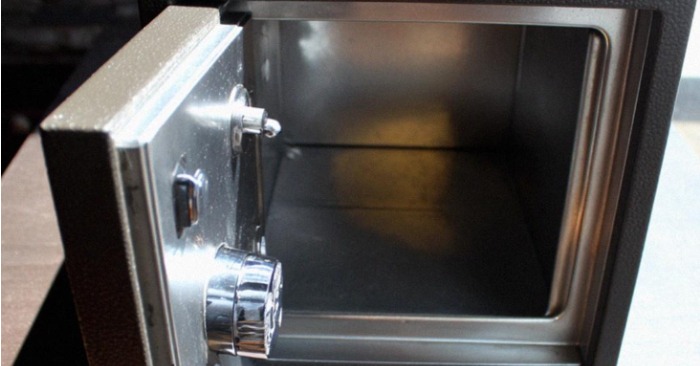
My safe, deep in the closet — where I kept the important documents — was slightly open. For a second, my mind refused to comprehend. Then I stepped over, and saw it: the papers were tangled, the lining scratched, and the envelope with the check was missing.
I REACHED IN WITH TREMBLING HANDS, AS IF IT COULD GROW BACK FROM NOTHING.
I reached in with trembling hands, as if it could grow back from nothing. But the space was empty.
The money. The $85,000. My father’s last gift.
It was gone.
Not just my stomach dropped. My trust did too. Emily did this while she was “going to the bathroom.” Of course, she knew where the safe was. And of course, she knew the code — I showed her years ago when she was panicking about a lost document, and I offered to let her store her important things with me.
The fact that she was capable of this hurt more than the theft itself.
I wanted to scream. To go straight to her. To call the police. But a cool, clear thought reached me first: this isn’t how it should be done.
If Emily wants to build her dream out of my money, let her have the show. Let her walk under the chandeliers. Let the room shine. Let her believe in victory.
And then — in front of her own audience — let her know the cost of stealing what isn’t hers.
THIS IS HOW I PREPARED A “GIFT” FOR MY SISTER.
This is how I prepared a “gift” for my sister.
The wedding day arrived as if a golden dust storm had swept through the hall. Crystal everywhere, rose scent and heavy perfume, champagne bubbled in the fountain, waiters swirled with full trays. The guests buzzed contentedly as if they had stepped into a fairy tale.
Before the ceremony, I found Emily in a mirrored hallway. She was stroking her dress, looking at herself, smiling like she knew exactly how envious everyone was. When she saw me, she leaned in closer and whispered in my ear:
— Isn’t it perfect? This is exactly the wedding Dad would have wanted. Be happy for me, Nadia. And go, meet Connor’s friends… maybe some of their luck will rub off on you.
And I answered as calmly as I had practiced.
— I’m happy you’re happy, Emily. I want you to have a beautiful day.
Later, when the dinner ended and the lights were dimmed for the gift exchange, I stepped out in front of the stage with a large, golden-wrapped box. The guests leaned forward, curious. Emily’s eyes lit up — with a smile as if she was sure she had gotten everything.
I set the box down. Opened it.
On black velvet lay the framed letter from my father — the same letter he wrote to me.
A frightened sound escaped Emily. The first crack in the perfect evening.
? BEFORE I PRESENT MY GIFT, I WOULD LIKE TO SHARE SOMETHING IMPORTANT — I SAID.
— Before I present my gift, I would like to share something important — I said. — My father wrote this letter before his death. He wanted his wishes to be clear.
The room fell silent. Even the DJ stopped the background music.
And I read it aloud. The words that were about me. The money he intended for me. The part where no one should dare tell me it wasn’t mine.
By the time I finished, whispers were snaking through the guests. Connor’s face stiffened. Emily’s blood seemed to drain from her. Eyes met.
— Wait… so this whole thing was paid for with that money?
— Emily stole from her own sister?
— Connor, you’re marrying into this family?
Emily slammed her bouquet onto the table in anger.
— Enough! Enough with the money! Look around! Beautiful wedding! Dad would want me to be happy!
Her voice trembled. Panic showed through. And then I reached back into the box and pulled out a second envelope.
— And this — I said, taking a deep breath — is a court order.
IT WAS AS IF A WAVE HAD CRASHED THROUGH THE ROOM: A COMMON, STUNNED SIGH.
It was as if a wave had crashed through the room: a common, stunned sigh. Connor almost recoiled.
— You said your sister gave you the money! — Connor hissed towards Emily.
I set the court order down beside the letter.
— After the money disappeared, I had to take legal action. The evidence was clear, and my father’s will was unmistakable. The court ruled: the savings were mine. And Emily was ordered to pay every single dollar back.
Emily’s face contorted.
— You ruined Dad’s wish! — she spat at me.
I didn’t raise my voice.
— No. You ruined it when you stole it. If you had been there with him, if you’d asked — maybe things would have turned out differently. But you took it. And now everyone sees who you really are.
I didn’t stay any longer. I grabbed my coat, and calmly walked out of the ballroom into the cool night. Behind me, the whispers no longer held curiosity — they held judgment.
Since then, Emily has been paying back the money bit by bit. And the story follows her everywhere. She wanted an unforgettable wedding — and indeed, she got one.
ONLY IT’S NOT REMEMBERED FOR THE CHAMPAGNE FOUNTAIN AND THE FIREWORKS, BUT FOR THE STOLEN INHERITANCE, MY FATHER’S LETTER, AND THE BRIDE, WHO IN ONE NIGHT LOST ALL HER SHINE.
One Sunday afternoon, I sat in the park, on the bench where my father and I used to feed the ducks. The water rippled, the ducks waddled closer, and I laughed through my tears.
— Do they always come this close? — asked a little boy from the neighboring bench.
— Always — I replied softly, throwing a piece of bread. — They remember who was kind to them.
I gave him the rest of the bread, letting him feed them.
And as I watched the water, a sense of peace settled over me. For the first time since my father’s death, I didn’t feel his absence — I felt that he was still with me. And no one can steal that.