Emily had always loved old places. Crumbling walls, broken staircases, windows staring out into nothing — they gave her the sense that history wasn’t gone, just waiting for someone to notice it again.
So during her trip to Eastern Europe, when locals told her about an abandoned castle hidden in the hills, she didn’t hesitate. The castle, they warned, had a reputation. People said it was cursed, that strange things happened inside its ruins. Emily laughed. “A perfect photo spot,” she said.
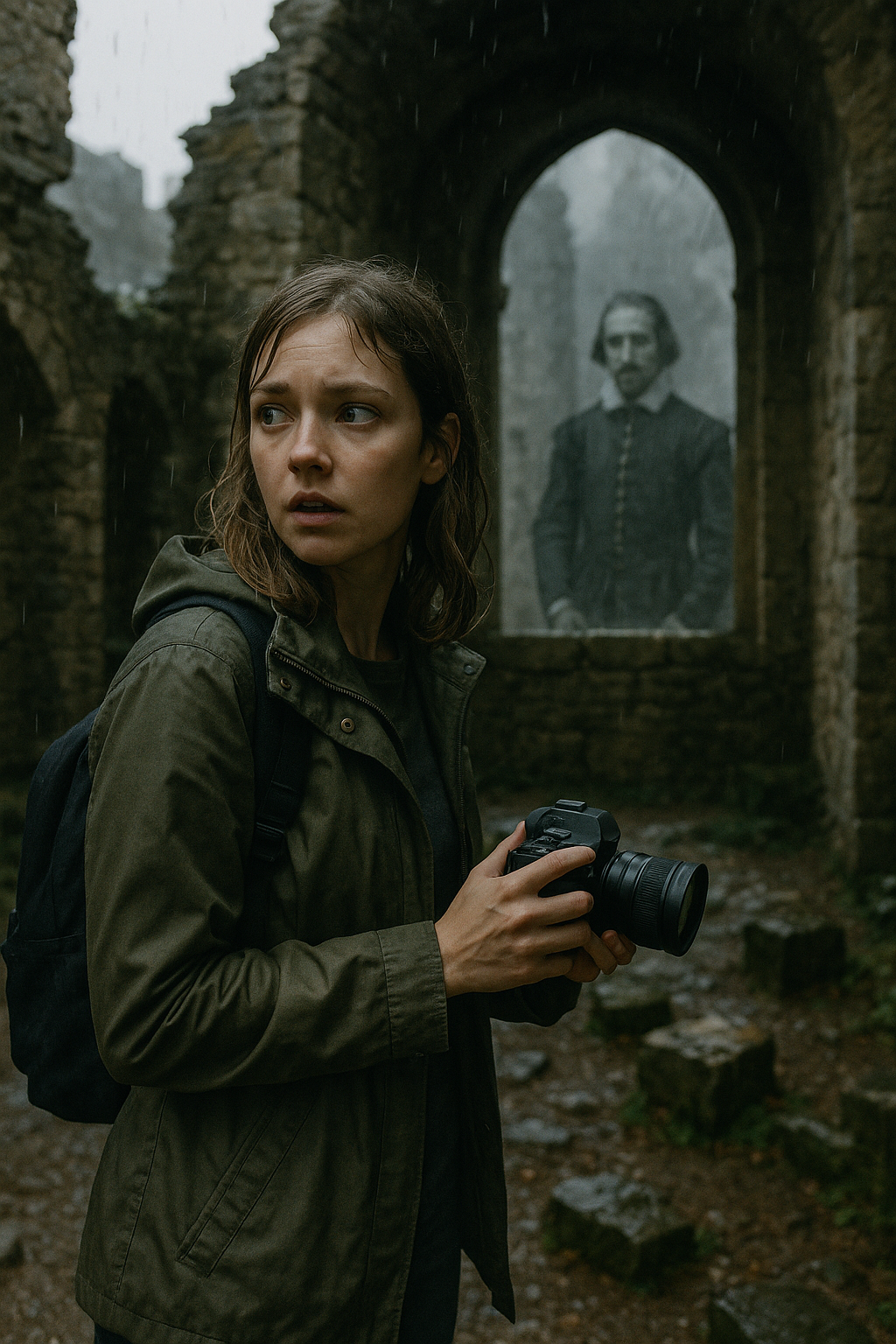
On a rainy afternoon, she hiked up the muddy path and stepped inside. The castle was half-ruined — one tower leaning dangerously, its roof long collapsed. She walked through echoing corridors, taking pictures of arched windows and moss-covered stone. Nothing unusual. Nothing frightening.
Or so she thought.
That evening, back in her hotel, Emily scrolled through the photos. Her heart skipped when she reached one shot — a window in the great hall.
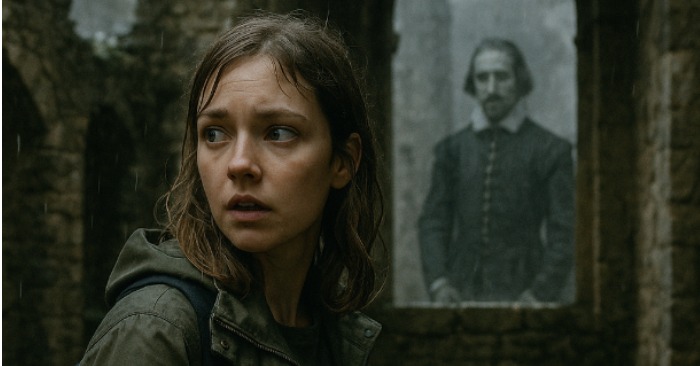
At first glance, it was just stone and glass. But in the corner, barely visible, stood a figure.
A man.
Not a tourist, not a modern visitor. He wore a dark doublet, high boots, and a collar straight out of the 16th century. His face was pale, his eyes hollow, staring directly into the camera lens.
Emily dropped the phone.
The next morning, she showed the picture to the hotel staff. Their reaction stunned her. One woman crossed herself and whispered, “The vanished lord.” Another muttered, “It has happened again.”
Emily demanded answers. Reluctantly, they told her the castle’s legend.
In 1574, a nobleman named Lord Andrei disappeared from his home — the very castle Emily had visited. He was wealthy, ambitious, and rumored to have betrayed the crown. On the night he was supposed to be arrested, he vanished without a trace. His body was never found. His lands were abandoned, his family line erased.
But over the centuries, travelers had claimed to see him in the ruins. Some swore they heard his boots on the stairs, others caught glimpses of his shadow in the windows. Historians dismissed it all as folklore.
Until Emily’s photo.
Back in London, Emily sent the image to an academic friend, a medieval historian. Days later, he called her in a shaken voice.
“This isn’t a hoax,” he said. “I ran it through analysis. No digital manipulation. The figure casts a shadow. He’s there.”
He paused before continuing: “And Emily… I compared the face to surviving portraits of Lord Andrei. It’s him.”
Emily’s blood ran cold.
Soon the photo spread online. Paranormal experts, historians, even skeptics weighed in. Some claimed it was proof of a ghost, others insisted it was a time slip, a moment where past and present collided. But one discovery silenced even the loudest doubters.
Hidden in the archives of a nearby monastery was a letter, written in 1574, on the very night Andrei disappeared.
It read:
“They come for me. If I do not escape, my soul will remain chained to these walls until truth is told. Whoever sees me must know: I was no traitor. I was betrayed.”
The handwriting matched Andrei’s other records.
Emily stared at her photo again and again. The eyes of the figure in the window weren’t threatening. They were desperate. Begging.
She realized she hadn’t just snapped a picture of a ruin. She had stumbled into a centuries-old mystery, capturing the face of a man who had been crying out for justice for nearly 500 years.
And though historians argued, though skeptics scoffed, the image remained.
A silent reminder that sometimes, history doesn’t stay buried. It waits.