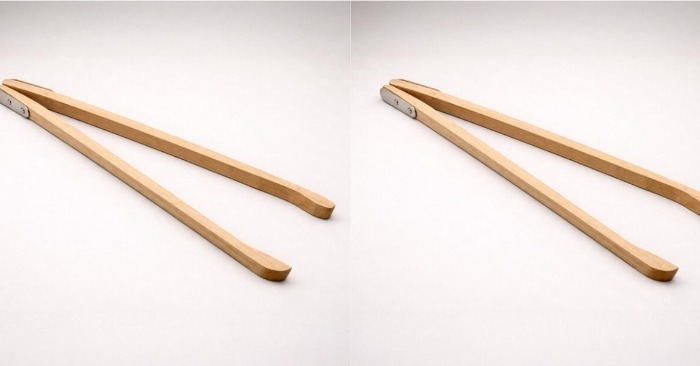
At first sight, it appears to be nothing more than two long wooden sticks joined together by a metal strip. Plain, unremarkable, almost confusing in its simplicity.
Yet for older generations, this unusual-looking object immediately evokes memories of steaming laundry days, boiling water, and exhausting household chores that could last for hours.
The item shown in the photo is an old-fashioned wooden laundry tong — a tool that was once a common sight in homes across villages long before washing machines transformed everyday life.
In those days, laundry was far from a quick task. It was a demanding process that required time, effort, and a great deal of patience.
Large metal pots were filled with water and placed over open flames, where sheets, towels, and clothing were boiled with soap, soda, and sometimes grated laundry bar. Steam rose thickly into the air, water churned violently, and handling the scalding fabric by hand was impossible.
That is exactly why these wooden tongs were so important.
They were used to safely lift boiling laundry from the hot water, gripping heavy, soaked fabric and transferring it into buckets or tubs for rinsing without risk of burns.
Despite their simple appearance, the design was remarkably practical and thoughtfully engineered for its purpose.
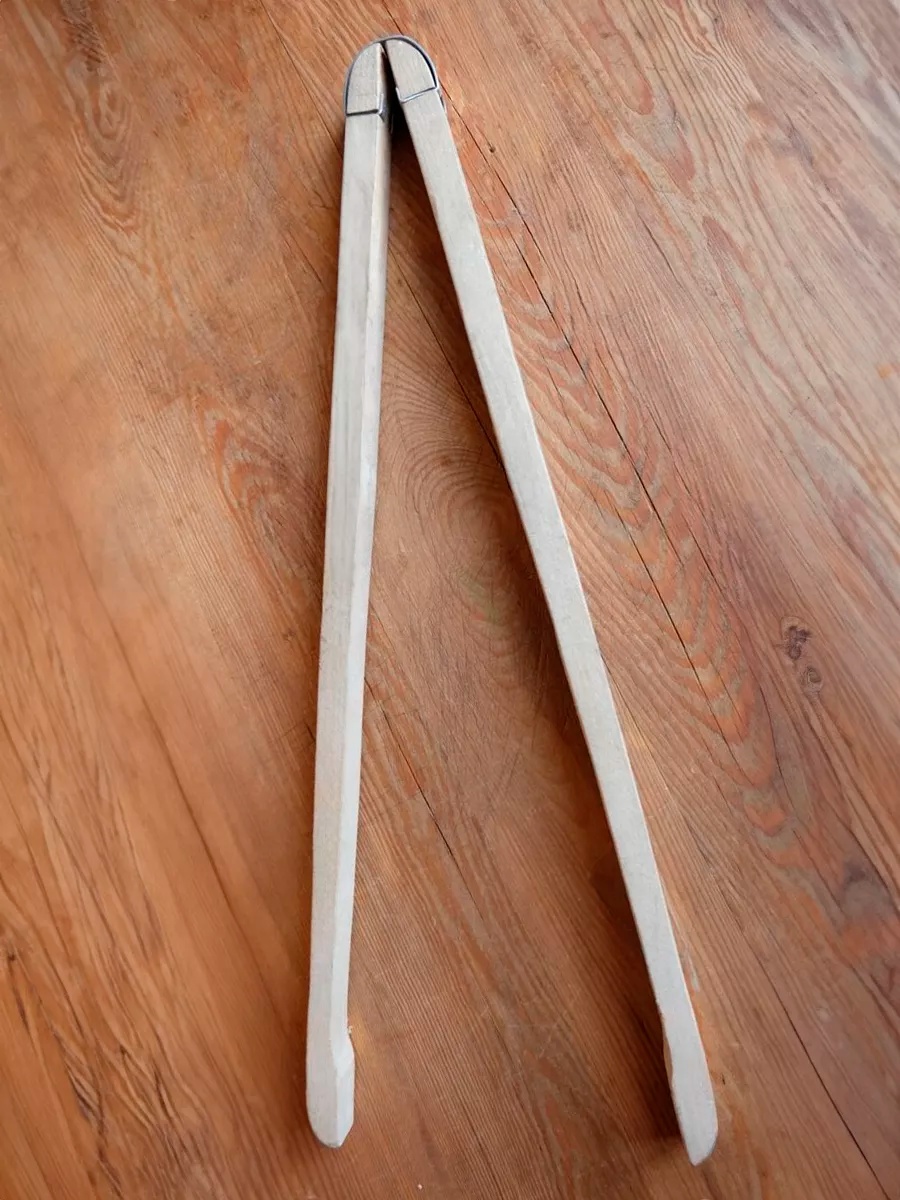
Two sturdy wooden slats were joined at the top using metal plates or rivets. Because of the natural flexibility of the wood, the handles would press firmly together when squeezed by hand, allowing users to grip slippery fabric securely without it slipping away.
Their elongated shape also served an important function, keeping hands safely away from hot steam and splashes of boiling water.
These tools were typically crafted from strong hardwoods such as beech or ash, ensuring they could withstand years of repeated, heavy use without easily breaking.
Interestingly, the same item went by different names depending on the region.
In many areas of Ukraine, they were simply referred to as “laundry tongs” or just “tongs.” In Polissia, people often called them “grabbers,” while in Podillia they were known as “washing tongs.” In Galicia, smaller versions were sometimes called “little tongs,” and in Slobozhanshchyna the term “grips” was occasionally used.
While the names varied from village to village, the function remained exactly the same — protecting the hands of the person doing the laundry.
Today, these wooden tongs have nearly vanished from everyday life. Most people encounter them only in museums, abandoned attics, or old rural homes.
Yet for many older generations, they represent far more than a forgotten household implement. They serve as a reminder of a time when clean clothes required hours of hard physical labor, and when every object in the home had a clear purpose and a story behind it.