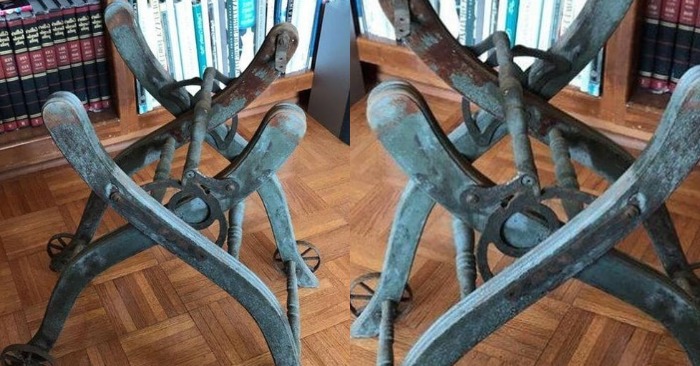
While helping my grandmother sort through her loft, I came across a large, heavy metal object that left me completely puzzled. At first sight, it resembled some kind of industrial machinery or a complex mechanical apparatus from an old workshop, but the unusual shape and small wheels made little sense. Its curved supports and solid build gave it an almost imposing presence, and I couldn’t determine what it might have originally been used for.
The structure is made of thick cast iron, painted black with a slightly worn, aged finish. Small wheels are fitted at the base, but they appear too delicate to transport anything truly heavy over uneven ground. The entire piece seems engineered to support significant weight while still allowing limited mobility on a smooth surface. My initial assumption was that it could be a vintage factory stand or some form of old industrial equipment, but nothing about its design quite matches any tools or machinery I’m familiar with.
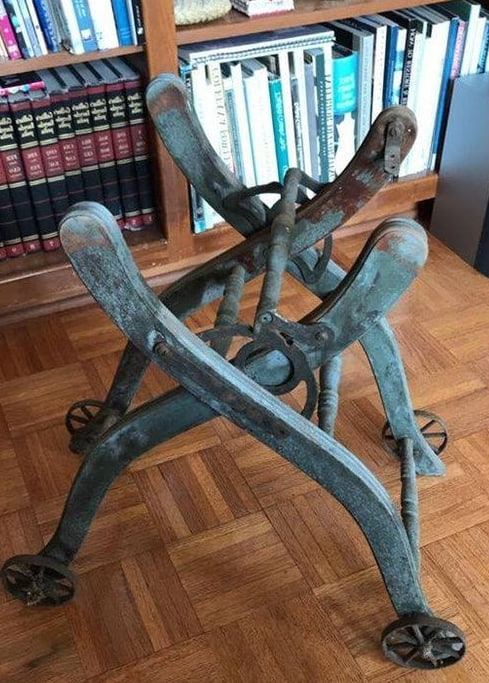
Upon closer inspection, I noticed small hinges and a clever system of joints, suggesting it once supported additional components—likely wooden parts or other removable attachments. The craftsmanship is striking, with every curve and connection engineered for durability. Even after decades, the structure remains exceptionally solid, almost indestructible in its build quality.
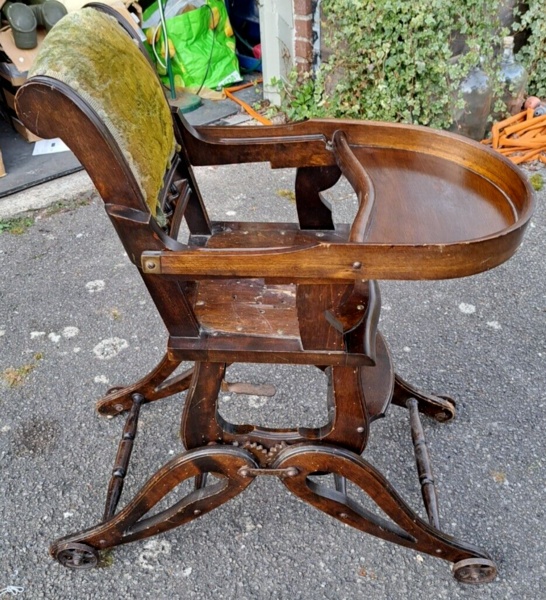
After some research and by comparing it with historical furniture examples, I was finally able to identify it: this is the cast-iron base of a Victorian-era children’s high chair. In the late 19th century, furniture was often designed to be multifunctional. This so-called “3-in-1” high chair could convert into a low rocking chair for play, a small indoor walker or stroller using its wheels, and a traditional high chair for feeding at the table.
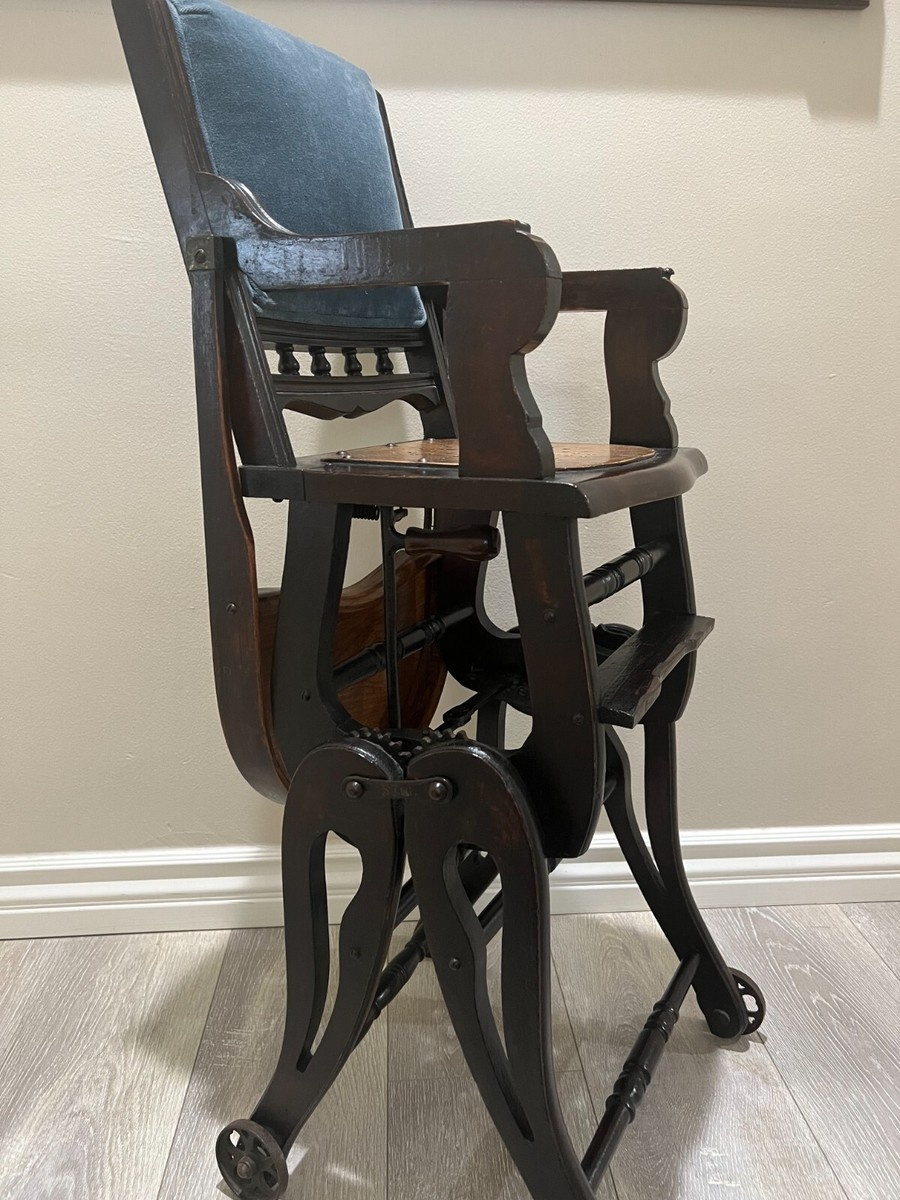
The small wheels at the base were designed specifically for indoor use, allowing the chair to be rolled smoothly across polished floors such as parquet or tile. The heavy cast-iron frame provided strong stability, preventing it from tipping over even when in motion or used in a rocking position. Over time, most of the original wooden components—such as the seat, tray, and tabletop—have deteriorated or been lost, leaving only the sturdy metal framework remaining as a surviving “skeleton” of the original piece.
Seeing it now in my grandmother’s loft, it’s easy to appreciate how inventive this design must have been in its time. A single piece of furniture was able to serve multiple functions within a household, and the level of craftsmanship ensured it could endure for generations. Even without its wooden elements, the cast-iron frame still carries the character and history of Victorian-era innovation.
Today, collectors often give these antique bases new life by repurposing them as plant stands, coffee table foundations, or distinctive decorative pieces in industrial or loft-style interiors. Discovering it hidden away in my grandmother’s loft felt like uncovering a quiet fragment of the past — a relic that reflects practicality, safety, and creative problem-solving in historic home design.