PART 2
The next morning, I walked into my lawyer Arturo Duarte’s office with a blue folder tucked under my arm, my heart colder than the morning air.
Arturo had been my husband’s friend for over thirty years. He knew our story. He knew Ernesto and I had started out near the Portales metro station, selling freshly squeezed juice, building our home peso by peso — the same home my children now wanted to divide as if I were already dead.
“Carmen,” he said when he saw me, “are you sure this is what you want?”
I placed the documents on his desk — bank statements, insurance policies, and the old will.
“More sure than ever.”
The old document stated everything was to be divided equally between Mauricio, Patricia, and Javier. The house in Coyoacán, my savings, the small shop I rented in Tlalpan, and Ernesto’s jewelry.
Arturo read in silence. Then he looked at me, saddened.
“What happened?”
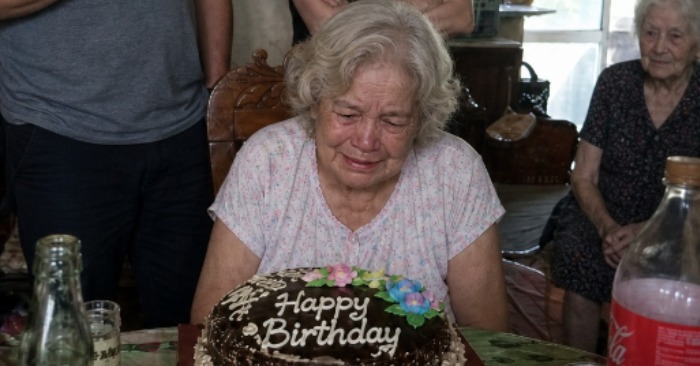
I told him everything. The cake. The laughter. The video. The sentence written in jam. I didn’t cry. I had cried too much already, and no one had listened.
When I finished, Arturo pressed his lips together.
“That wasn’t a joke, Carmen. That was cruelty.”
“But cruelty isn’t something that deserves to be inherited,” I replied.
So I made a new will.
Each of my children would receive one Mexican peso. One. Not out of generosity, but so they would know I hadn’t forgotten them — I had simply chosen not to reward them.
The rest would go to the San Judas community kitchen, where I had been volunteering for months without my children knowing. A portion would help abandoned elderly people. Another would go to widows who couldn’t afford rent. The building would be given to an organization that provides affordable medical consultations. Ernesto’s jewelry would be auctioned, except for his wedding ring, which I asked to be buried with me.
ARTURO FINISHED THE WILL AND HANDED ME THE PEN.
“Will you tell them?”
“Not yet.”
In the following weeks, my children acted as if nothing had happened. Mauricio sent a message about “organizing the documents.” Patricia came one Sunday to “help sort through my memories.” Javier asked if he could use my house to film a video about “nostalgia for Mexican grandmothers.”
I closed the door.
But the real turning point came a month later.
My neighbor showed me the video of the cake. Javier had posted it on Facebook. It had already gathered thousands of reactions. Not because it was funny — but because it was outrageous. People tore them apart in the comments.
And then I understood why my children had started calling me desperately.
Not to apologize.
BUT BECAUSE THE WHOLE COUNTRY HAD FINALLY SEEN THEM FOR WHO THEY REALLY WERE…
PART 3
The courthouse was crowded with reporters. Mariana cried — without tears — standing beside her lawyer, Santiago Lerma, wearing a shark-like smile and a watch worth more than my house.
“My client has suffered greatly under her father’s controlling behavior,” he said. “For years, she was denied the chance to see her children.”
I LISTENED IN SILENCE. THEN A NEIGHBOR WAS CALLED TO TESTIFY, SWEARING HE HAD HEARD SHOUTING, THREATS, AND HAD SEEN THE CHILDREN BEING LOCKED INSIDE. LIES, ONE AFTER ANOTHER.
When the judge asked if I had anything to say, I took out the yellow envelope.
Mariana stopped crying.
“Your Honor,” I said, “my daughter signed this on August 18, 2011.”
The paper was burned, but still legible. With a trembling voice, I read:
“I, Mariana Valdés, voluntarily transfer custody of my children, Mateo, Sofía, and Leonardo to my father, Ernesto Valdés, in exchange for 25,000 pesos. I promise not to claim my rights or seek them in the future.”
A stunned silence filled the courtroom.
“25,000 pesos?” the judge asked.
I TOOK OUT ANOTHER DOCUMENT.
“It was for the purchase of a used red Jetta. Here is the receipt copy. And here is the photograph.”
In the photo, a young Mariana smiled beside the car, while in the background Leo’s stroller lay abandoned in the sun.
Sofía, escorted by a social worker, covered her mouth. Leo began to cry.
“This is fake!” Mariana shouted. “This old man made everything up!”
Then Mateo took out his phone.
“That’s not all, Your Honor.”
He pressed play. Mariana’s voice filled the courtroom:
“WHEN I GET CONTROL OF THE TRUST FUND, I’LL SEND THESE KIDS TO A CHEAP BOARDING SCHOOL. I’M NOT GOING TO WASTE MY LIFE RAISING BROKEN CHILDREN. AND MY FATHER CAN ROT IN PRISON.”
No one breathed.
Lerma tried to stand, but the judge stopped him. He ordered verification of the documents, recordings, and testimonies. In less than an hour, everything began to collapse: bribed witnesses, forged documents, suspicious transfers.
Mariana was arrested on the spot. As they led her away, she shouted:
“They’re mine! I gave birth to them!”
Sofía, with tears in her eyes, replied:
“But he loved us.”
That judgment was worth more than any court ruling.
CUSTODY WAS RETURNED TO ME. THE TRUST FUND WAS PROTECTED UNTIL THE CHILDREN CAME OF AGE. MARIANA AND LERMA WERE CHARGED WITH FRAUD, CHILD NEGLECT, AND FORGING DOCUMENTS.
Years later, Mateo went to college, Sofía began writing stories, and Leo no longer had nightmares. We sold the old house and bought a camper. We traveled through Oaxaca, Veracruz, Chihuahua, and Sonora — not for luxury, but to remind ourselves that no one would ever deceive us again.
One evening, as we looked out at the sea in Mazatlán, Leo asked me:
“Grandpa, what is a family?”
I looked at my three boys by the fire and understood the answer.
Family isn’t who gives you life.
Family is who stays… even when everyone else walks away.