When I realized on my 49th birthday that my house had become too loud in all the wrong ways, I was standing in the middle of the kitchen. The hum of the refrigerator, the ticking of the kitchen clock and the hollow echo of my own footsteps – all of it pressed in around me like a fog I could not shake off.
On some days I turned on the television just to drown out the silence. On others I let it stretch out until it wrapped itself around me like a blanket I could no longer get out of. On that day I stood in my kitchen and cried into the sink.
Not because something had happened, but because nothing had happened.
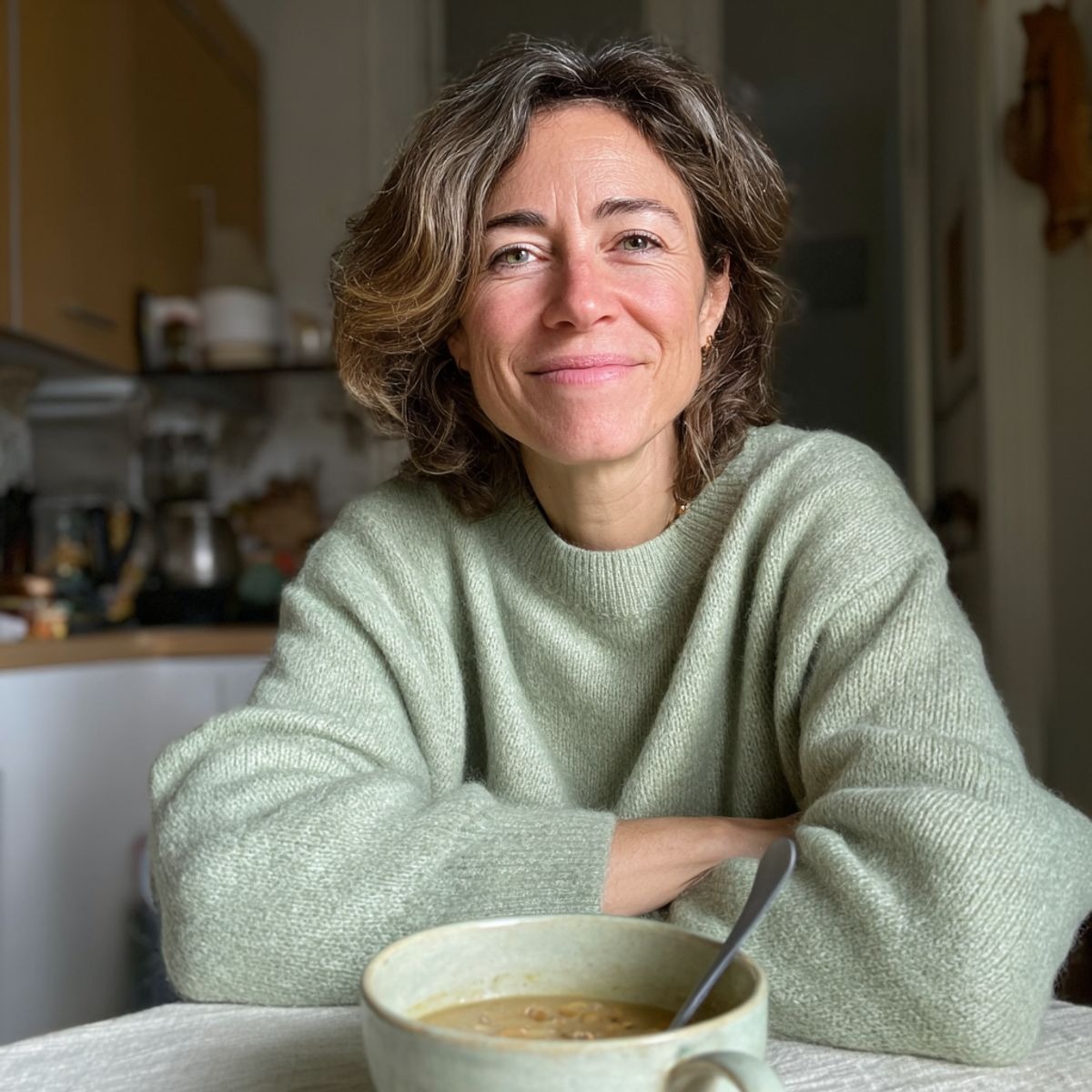
Fifteen years earlier my husband Oscar had left with a suitcase and the vague promise that he needed to “find himself.” What he found instead was someone new. And I was left behind – with a mortgage, two toddlers and a hospital shift schedule that turned sleep into a myth.
I fought my way through those years with caffeine, scrubs and the sharp edge of necessity. There was no time to break down. No room for self-pity, certainly not when peanut butter sandwiches had to be made and math homework had to be deciphered.
Now that both children were in college, their empty bedrooms stared back at me like questions I had no answers to. On most evenings I caught myself setting three plates on the table before remembering again – no one was coming home.
THAT’S WHEN I STARTED HELPING AT THE SOUP KITCHEN DOWNTOWN.
That’s when I started helping at the soup kitchen downtown. Not out of charity and honestly not for my soul or to please God either … I simply needed to feel needed again outside the hospital walls.
The soup kitchen building was always a little too cold, always a little too loud, with flickering neon lights when it rained and a smell of a mixture of bleach and stale coffee.
Most of the cups were chipped, and every chair wobbled a little when you sat down. The air always faintly smelled of dish soap and damp coats, and the floor near the serving line was never quite dry. When trays clattered or soup sloshed over, the whole room seemed to flinch together.
But none of that mattered. What counted were the people.
They were tired. Some angry. Some smiled more than one would expect. But they were human, and they were trying. They came with hunger in their stomachs and pride in their bones.
I admired them more than they ever knew.
That’s where I met her.
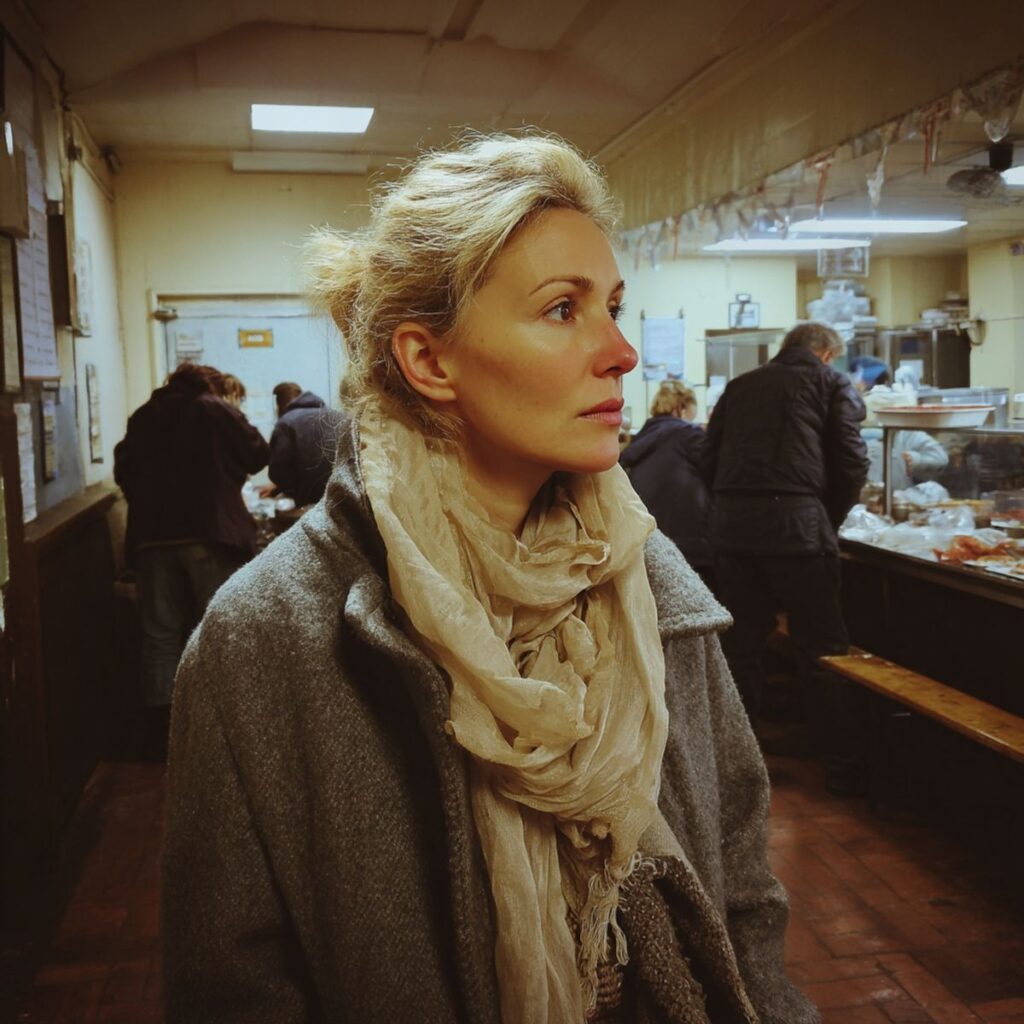
Rachel came every Saturday morning, always wrapped in the same gray coat and scarf, her hair neatly hidden underneath. She never asked for extras, never raised her voice and never drew attention. But there was something gentle about her, a quiet manner that made you look twice.
“ONE FOR ME AND ONE FOR SOMEONE WHO CAN’T COME IN,” SHE SAID POLITELY AT THE COUNTER.
“One for me and one for someone who can’t come in,” she said politely at the counter.
It was barely more than a whisper – honestly, I probably shouldn’t have heard it at all.
Officially, we were only allowed to give out one plate per person. That was Frank’s rule: one meal, no extras. I had signed an agreement where that was in bold print.
But Rachel always looked me in the eyes when she said it. Her voice didn’t tremble. She wasn’t lying. There was someone else, and she would not leave him outside in the cold.
“Two, please,” she repeated, this time a little louder.
“You know I could get in trouble,” I whispered back one Saturday, hesitating with the second plate in my hand.
“I know, Anna,” she said and lowered her gaze. It surprised me that she knew my name. “I understand that.”
But she didn’t walk away. She waited, holding her breath as if she were used to hearing no.
I HANDED HER THE SECOND PLATE ANYWAY.
I handed her the second plate anyway.
“Thank you,” she said more quietly than before. “You have no idea what that means to me.”
She never stayed longer than necessary. She held both plates like a treasure, nodded once and disappeared through the back exit.
I didn’t ask where she was going. I should have. But I didn’t.
Until the director, Frank, showed up and no one questioned what I was doing anymore.
He had gray hair that was always slicked back strictly, a stiff smile that never reached his eyes, and the posture of a man who still ironed his jeans on Sunday afternoons.
One Saturday morning he came in unannounced, his arms tightly crossed, and scanned the room as if he were just waiting to catch someone breaking the rules.
I SAW HIS GAZE FALL ON RACHEL.
I saw his gaze fall on Rachel. I saw him notice the second plate in her hands, and my stomach twisted.
Frank’s mouth became thin.
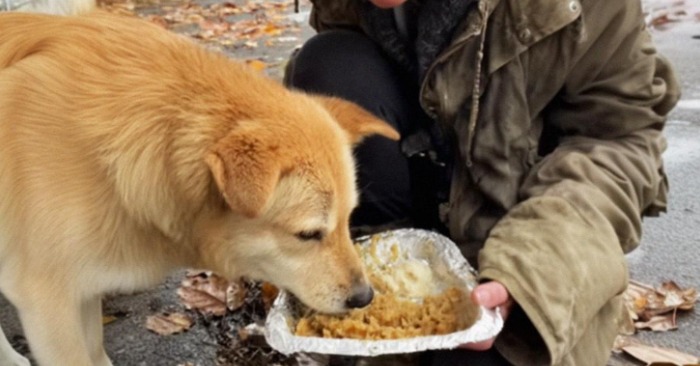
“I saw her feeding a dog,” he snapped. “We’re not here to feed animals. We barely have enough for the people we have to provide for. Come on, people. You know that.”
I froze, my hands still over the serving counter. All the chatter around us seemed to disappear.
“Frank,” I said quietly. “She’s never asked for more. She doesn’t take extra rolls or ask for more chicken … she just wanted –”
“We have rules, Anna,” he interrupted me. “And she broke them. You too.”
He turned to Rachel, his voice now loud enough that half the kitchen could hear it.
YOU! YOU’RE DONE HERE.
“You! You’re done here. Get out. And don’t come back.”
The ladle slipped from my fingers and clattered into the sink. Rachel did not argue. Her eyes were wide, her cheeks flushed, but she did not defend herself. She simply stood there as if she had always expected exactly this.
Then she turned and left, her scarf slipping from her shoulder as she reached for the door.
I didn’t think. I just followed her, my heart pounding in my chest.
“Rachel,” I called outside. “Wait!”
She slowed her step, but did not stop.
“Is it true?” I asked. “Because of the dog? You were really feeding a dog?”
“Yes,” she said hesitantly. “I can’t let him starve, Anna. I can’t.”
THERE WAS NO ANGER IN HER VOICE, ONLY A TIRED HONESTY.
There was no anger in her voice, only a tired honesty.
She led me around the side of the building. We walked past dumpsters and cracked asphalt. In the shadow of a utility box lay a piece of cardboard and a frayed fleece blanket. Curled up in it, almost invisible, lay a dog.
He was thin. His ribs showed beneath his dull fur. But when he saw her, his tail moved – slowly, weakly, but unmistakably.
“His name is Lorde,” she said softly. “I found him behind a supermarket. Someone had tied him up and left him.”
Lorde lifted his head and looked at me. His eyes were the gentlest brown I had ever seen – full of trust, even now.
Something inside me broke.
Before I knew what I was doing, I reached into my purse and pulled out the envelope with the cash that I had withdrawn that morning. Almost my entire paycheck – meant for bills, groceries and gas.
I THOUGHT OF THE OVERDUE CREDIT CARD BILL ON MY KITCHEN TABLE.
I thought of the overdue credit card bill on my kitchen table. Of the glowing fuel indicator in my car. Of how I counted coupons and ordered food I actually couldn’t afford … but none of that seemed to matter in that moment. Not now, not while I was looking at her.
“Here,” I said and pressed it into her hands. “Find a room. A warm meal. Something warm for both of you …”
“I can’t accept this,” Rachel said, her hands trembling. “You don’t even know me.”
“I know enough,” I said.
She began to cry. Not loudly, not chaotically – just quiet, hot tears that traced lines down her cheeks as she collapsed inward and clung to me. I held her until the trembling subsided.
A part of me was afraid I had been foolish, had given too much. But even deeper I felt a quiet certainty, as if something inside me had shifted back into place after being out of balance for a long time.
That evening I went home with empty pockets, but I slept better than I had in months.
Six months later I was standing on my porch sorting through the usual stack of bills and flyers. A catalog for garden furniture I would never buy, a coupon for an oil change – and then … something else. A small cream-colored envelope. No return address. My name in flowing handwriting.
I PAUSED, THE ENVELOPE TREMBLING SLIGHTLY IN MY HANDS.
I paused, the envelope trembling slightly in my hands. I did not recognize the handwriting at first, but something about the curves of the A made my chest tighten.
I opened it slowly. Inside was a single sheet of paper, folded twice, and a photo. The paper was thin, the ink smudged in some places. But the words were clear.
“Dear Anna,
please don’t be angry that I found out your address. I promise, I meant no harm. I just wanted to tell you what your kindness did for me.
You probably don’t remember me, but I’m the woman you helped outside the soup kitchen – Rachel. The one with the dog.”
As I read, I heard her voice again. Gentle and calm, not desperate, just tired.
“After you gave me the money, I went to a small hair salon and asked them to wash and cut my hair. It sounds silly, I know. But I hadn’t really seen myself in years. I bought food for Lorde. And I got clean clothes from a thrift store and used the rest to reapply for my ID and my social security number.
WHEN I HAD MY DOCUMENTS, I COULD FINALLY APPLY.
When I had my documents, I could finally apply. I started cleaning at a diner two evenings a week. Then more shifts were added. When I got my first paycheck, I cried the whole bus ride home.
I rented a tiny room for myself and Lorde. He is healthy now, with shiny fur and a red collar. We are safe.
If you would like to visit us, I would love to cook you dinner. My address is on the back.
With love, Rachel.”
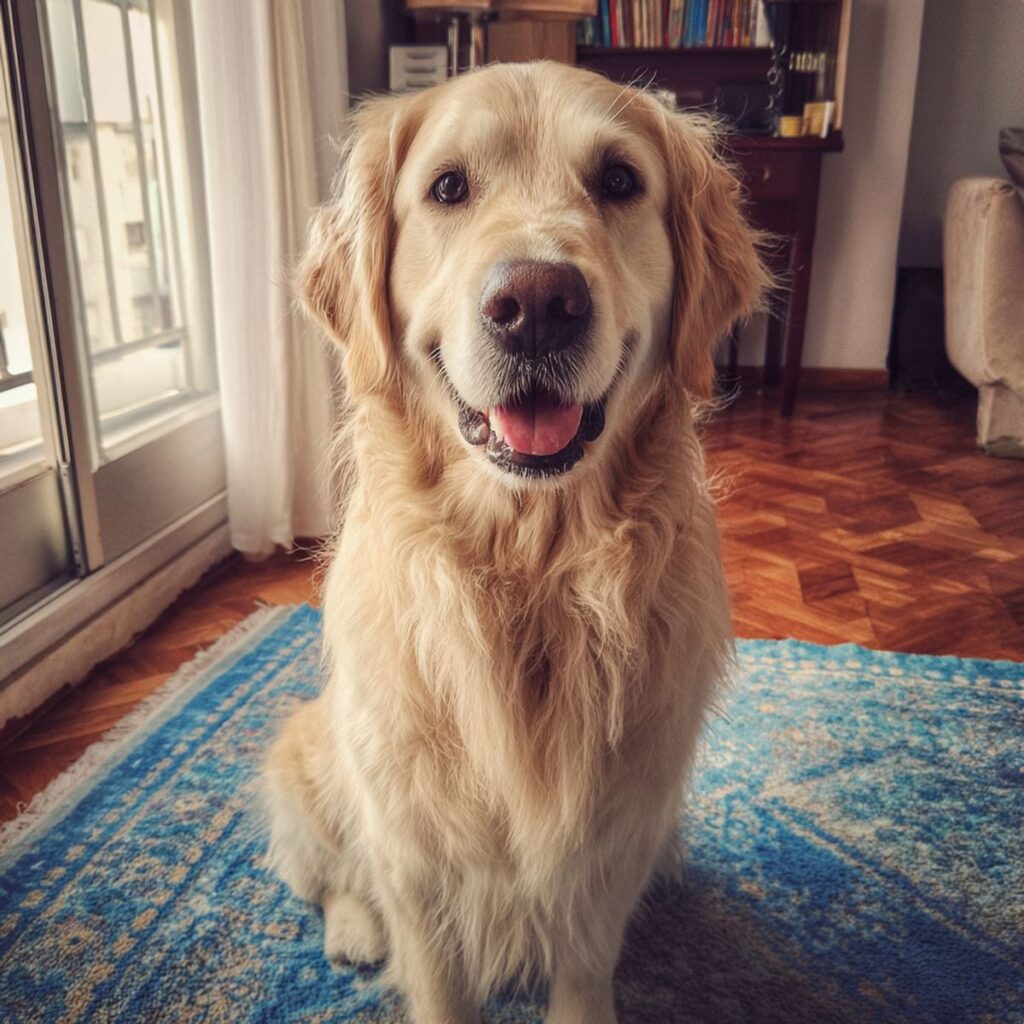
I unfolded the photo. Rachel was standing in a small kitchen, light falling through the window behind her. She was wearing a faded blue sweater. Her smile was wide and real, one arm around Lorde, who looked well-fed and very proud.
“I can’t believe it,” I whispered. “She did it.”
I sat down on the porch step, the letter trembling in my hands.
THE FOLLOWING SATURDAY I DROVE ACROSS THE CITY.
The following Saturday I drove across the city. I must have read the letter a dozen times before turning off the engine. Her address led me to a plain brick building with peeling white paint and a narrow garden path that had once been lovingly tended.
Small marigolds were blooming beside the steps, as if someone had tried to make it homely.
I stood in front of her door, the letter in one hand and the photo in the other. I had no idea what I was going to say. Should I thank her for the letter? Or apologize for not having done more?
My heart was pounding harder than it should have been.
When the door opened, Rachel stood in front of me. She looked so different that I almost didn’t recognize her.
Her hair was shiny and reached just above her shoulders. She was wearing a clean blue cardigan, her posture more upright than I remembered. But it was her eyes – clear, bright and quietly determined – that made my throat tighten.
“Anna?” she asked, her voice catching.
“I got your letter,” I said, swallowing the rising emotion.
“I didn’t think you would really come,” she said and stepped forward to hug me.
Lorde came out behind her, barked once and then sat down at my feet with a proud huff. His fur now shone deep golden, and his red collar sparkled in the sunlight.
“You weren’t hard to find, Anna,” Rachel said as we went inside. “I went back to the soup kitchen a few weeks later and asked about you. Most didn’t know your last name, but someone remembered that you wore scrubs. They said you work at the district hospital.”
“That must have been Jorge. He likes collecting people’s stories,” I smiled.
“I went there during visiting hours. I told the nurse at the reception desk that I wanted to write you a thank-you letter. I didn’t expect her to give me your address. I only wanted to leave a message, but she gave me your address anyway. I hope I didn’t cross a boundary.”
“Not at all,” I said softly. “I’m glad you found me, Rachel.”
Her room was small and filled with sunlight, with only one window, a wobbly table and a worn carpet that looked as though it had been vacuumed with care. A pot was simmering on the stove, and the scent of warm bread hung in the air. Two mismatched cups stood on the table, waiting.
“Sit down,” she said, gesturing to the chair opposite her. “It’s just chicken stew, but I made it myself. I wanted to thank you properly.”
“You didn’t have to,” I said.
“I know. But I had to.”
We ate slowly, interrupted by fragments of conversation and laughter. We talked about music we loved, books we wanted to read, her job at the diner, my long shifts and difficult patients. And eventually the heavier parts of her story also came to light, piece by piece.
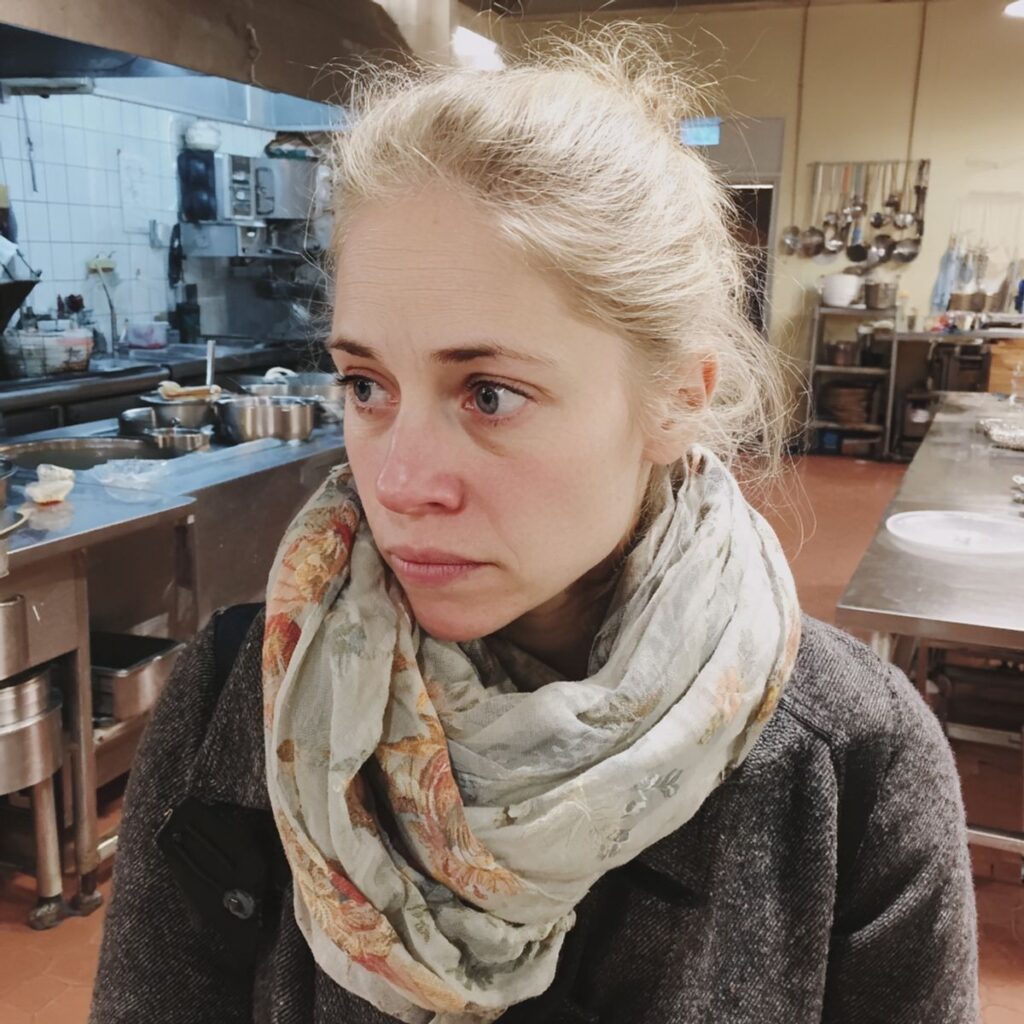
“Six miscarriages, Anna,” she said softly. “It destroyed my marriage. I lost the babies, and then I lost myself. My husband couldn’t bear the grief, and I didn’t know how to go on after he left. I thought maybe I wasn’t meant for anything better.”
“I thought that too,” I said. “More often than I want to admit.”
She nodded, her eyes shining.
She told me that she had once been a dental assistant, years before the miscarriages and the crash that followed. She used to bake on weekends, she said, just so the apartment would smell like home.
“Then I found Lorde. Starving, tied up behind a dumpster … I wasn’t looking for a reason to keep going, Anna. But he gave me one. And then you gave me a second.”
“It wasn’t much,” I said.

“That’s not true, and you know it. You have no idea what it meant to me.”
We didn’t say anything for a while. Lorde dozed under the table, his tail thumping occasionally in his sleep.
“You reminded me that I’m not invisible,” Rachel said.
“Oh, dear. You never were,” I said and squeezed her hand.