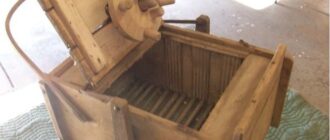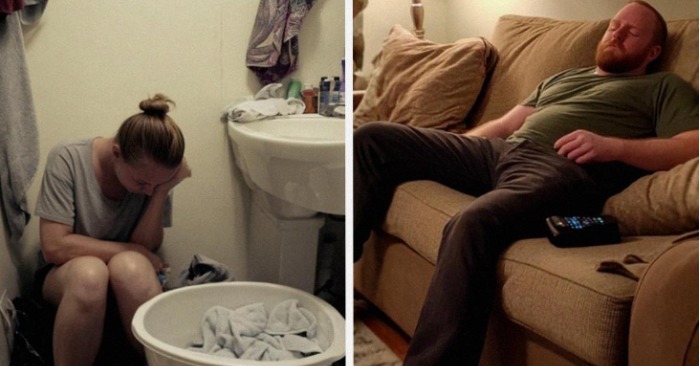
Six months after giving birth, completely overwhelmed with baby laundry and exhausted to the core, I truly thought my husband would understand when our washing machine broke down. But instead of compassion, I got nothing but a shrug and the words: “Wash everything by hand — people have been doing that for centuries.”
I never thought I would spend so much of my life doing laundry. Six months ago, I gave birth to our first baby. Since then, my daily routine had been an endless cycle of breastfeeding, changing diapers, cleaning, cooking, and washing. So much washing.
Babies go through more clothes in a single day than an entire soccer team. On a good day, I washed at least four kilos of tiny onesies, burp cloths, blankets, and bibs. On a bad day? Let’s just say, I stopped counting. When the washing machine finally broke, I knew I had a problem. I had just pulled a soaking pile of clothes out when it sputtered, made a sad grinding noise, and simply died. I pressed the buttons.
Nothing. I unplugged it, plugged it back in. Nothing. My heart sank. When Billy came home from work, I didn’t waste any time. “The washing machine is broken,” I said as soon as he walked in the door. “We need a new one.”
Billy didn’t even look up from his phone. “Hm?”
“I said, the washing machine is broken. We need to replace it. Soon.” He absentmindedly nodded, took off his shoes, and kept scrolling. “Yeah. Not this month.”
I blinked. “Excuse me?”
“Not this month,” he repeated.
“Maybe next month when I get my paycheck. In three weeks.” My stomach tightened. “Billy, I can’t go three weeks without a washing machine. The baby’s clothes need to be washed every day.”
Billy sighed as if I was asking for something completely unreasonable. He put his phone down and stretched his arms over his head. “I’ve already promised my mom I’d pay for her vacation this month. She really deserves it.”
I stared at him. “Your mom’s vacation?”
“Yeah. She watches the baby. I thought it’d be nice to do something for her.”
Babysitting? I swallowed. His mom came over once a month.
SHE SAT ON THE COUCH, WATCHED TV, ATE THE DINNER I MADE, AND NAPPED WHILE THE BABY SLEPT.
She sat on the couch, watched TV, ate the dinner I made, and napped while the baby slept. That wasn’t babysitting. That was a visit. Billy kept talking as if he hadn’t just dropped a bombshell. “She said she needs a break, so I thought I’d cover her trip. It’s only a few days.”
I crossed my arms. “Billy, your mom isn’t babysitting. She comes over, eats, naps, and leaves again.”
He frowned. “That’s not true.”
“Oh really? When was the last time she changed a diaper?” Billy opened his mouth, then closed it again. “That’s not the point.”
I let out a sharp laugh. “Oh, I think it is.”
He groaned and rubbed his face. “Can’t you just wash everything by hand for a while? People did it in the past. No one died from it.”
I stared at him, feeling my blood start to boil. Wash everything by hand. As if I wasn’t already drowning in work, exhausted, aching, with barely three hours of sleep a night. I took a slow, deep breath, clenched my fists. I wanted to scream, to yell, to make him understand how unfair this was. But I knew Billy. Arguing wouldn’t change anything.
So I exhaled and looked at the pile of dirty laundry by the door. Fine. If he wanted me to wash everything by hand, then that’s exactly what I’d do. The first load wasn’t too bad. I filled the bathtub with soapy water, tossed in the baby clothes, and started scrubbing. My arms ached, but I told myself it was just temporary.
Just a few weeks. By the third load, my back was screaming in pain. My fingers were sore. And I still had towels, sheets, and Billy’s work clothes left. Every day was the same. Get up, feed the baby, clean, cook, wash laundry by hand, wring it out, hang it up.
By the end, my hands were swollen, my shoulders stiff, my body utterly exhausted. Billy didn’t notice. He came home, took off his shoes, ate the food I made, and plopped down on the couch. I could barely hold a spoon, but not once did he ask if I needed help. He didn’t even glance at my hands, red and cracked from hours of scrubbing.
One evening, after I’d finished another mountain of laundry, I dropped down next to him on the couch. I winced as I rubbed my aching fingers. Billy glanced at me. “What’s wrong with you?”
I stared at him. “What’s wrong with me?”
He shrugged. “You look tired.”
I laughed bitterly. “Oh really? I wonder why.”
He didn’t even flinch. Just turned back to the TV. In that moment, something inside me snapped. Billy wouldn’t understand — not unless he felt the discomfort himself. If he wanted me to live like a 19th-century housewife, then fine. He could live like a caveman. So I planned my revenge. The next morning, I packed his lunch as usual. Only this time, instead of the big hearty meal he expected, I filled his lunchbox with rocks. On top, I put a folded note.
Then I kissed him on the cheek and sent him off to work. And waited. At precisely 12:30, Billy stormed through the front door, red with rage. “What the hell did you do?!” he yelled, slamming the lunchbox down on the counter. I turned away from the sink and dried my hands on the towel.
“What do you mean, sweetheart?”
He ripped open the lid, pointed at the rocks, and grabbed the note. He read it aloud: “In the past, men provided food for their families. Go hunt, make fire with rocks, and cook it yourself.” His face contorted with anger. “Have you completely lost your mind, Shirley? I had to open this in front of my coworkers!”
I crossed my arms. “Oh, public humiliation is bad when it happens to you?”
Billy clenched his jaw. He looked like he wanted to scream, but this time, he had no response. “Come on, Billy. Explain to me where the difference is.”
His jaw tightened. “Shirley, this is — this is childish.”
I laughed sharply. “Oh, I see. Your suffering is real, but mine is just childish?”
He threw his hands up. “You could’ve just talked to me!”
I stepped closer, the fire burning in my chest. “Talk to you? I did, Billy. I told you I couldn’t go three weeks without a washing machine. I told you I was exhausted.”
And you just shrugged and told me to wash by hand. As if I were a woman from the 19th century!”
His nostrils flared, but I saw that little flicker of guilt in his eyes. He knew I was right. I pointed at the lunchbox. “You thought I’d just accept it, didn’t you? That I’d scrub and toil and ruin my back while you lay carelessly on the couch every night?”
Billy looked away and rubbed his neck. I shook my head. “I’m not your servant, Billy.”
“And I’m definitely not your mother.”
Silence. Then he muttered, “I get it.”
“Do you?” I asked. He sighed, his shoulders slumping. “Yeah. I do.”
I stared at him for a long moment, letting his words sink in.
Then I turned back to the sink. “Good,” I said calmly. “Because I mean it, Billy. If you ever again put your mother’s vacation ahead of my basic needs, you’d better learn how to make fire with those rocks.”
Billy sulked the rest of the evening.
He barely touched his food, didn’t turn on the TV, just sat with his arms crossed on the couch, staring at the wall as if it had personally betrayed him. Every now and then, he sighed loudly, as if I should feel sorry for him. I didn’t. For the first time, he was the one who felt uncomfortable.
He needed to feel the weight of his own decisions. And I let him stew in it quietly.
The next morning, something strange happened. His alarm went off earlier than usual. Instead of hitting snooze five times, he actually got up. He dressed quickly and left the house without a word.
I didn’t ask where he was going. I just waited. That evening, I heard it before I saw it — the unmistakable sound of a large box being dragged through the door. I turned around. And there it was. A brand new washing machine.
Billy didn’t say a word. He hooked it up, connected the hoses, checked the settings.
No complaints. No excuses. Just quiet determination. When he was done, he finally looked up. His face was embarrassed, his voice soft. “Now I get it.”
I studied him for a moment and nodded. “Good.”
He rubbed his neck. “I should’ve listened to you sooner.”
“Yeah,” I said with my arms crossed. “You should’ve.”
He swallowed, nodded again, grabbed his phone, and wordlessly walked away. No justification. No argument. Just acceptance. And honestly? That was enough.