Since my husband’s death, I’ve learned how to carry everything on my own back. I had no other choice. But on that Friday, during my lunch break in the hospital cafeteria, just one meal break reminded me that I’m not as invisible as I sometimes feel.
I’m Sophia, 45 years old. I’ve been working as a nurse at a large city hospital in Pennsylvania for twelve years. It’s not a glamorous profession, and there are days when even the morning feels too hard to face. But this is what I chose, and most of the time I feel like this is where I belong: where someone else’s fear, pain, or hope is clinging to my hands.
What I didn’t expect was to become a widow at 42.
My husband, Mark, died of a heart attack three years ago. There were no warnings. He didn’t complain about anything. He was upstairs, brushing his teeth, humming softly — and I even smiled to myself because he always did that. And then, in the next moment… he was gone.
He was 48. We had been married for 19 years. We had been through so much together, and I truly thought our life was “done” — we just had to live it.
Since then, it’s just been the two of us: me and our daughter, Alice. She’s 15 now. She has her father’s dry humor and my stubbornness — and that combination is sometimes a storm. Still, she’s the one who can save my day with even the smallest things. She still slips notes into my lunch bag, just like when she was little. Last week, she drew a little caricature: a tired nurse, holding a huge coffee mug, with the caption: “Hang in there, Mom!” I laughed so hard that I almost cried.
We live in a modest two-bedroom apartment, just a few blocks from the hospital. Overtime isn’t an exception for me; it’s routine. I often work doubles, sometimes back-to-back on weekends. Not because I like it, but because it’s the only way I can keep things stable and make sure Alice gets what she needs. She never asks for much — and maybe that’s what hurts the most. She knows too well what we can’t afford.
That Friday started like many others: in chaos. The ER was understaffed again. Two nurses had canceled their shifts, and the patient list was already full before I could even sip my coffee. For six hours, I went non-stop: from room to room, blood pressure checks, IVs, paperwork, crying relatives, impatient doctors, phone calls, rushing. There wasn’t a single moment when I could truly catch my breath.
BY THE TIME I FINALLY REACHED THE CAFETERIA, IT WAS PAST TWO IN THE AFTERNOON.
By the time I finally reached the cafeteria, it was already past two in the afternoon. My feet hurt, the back of my uniform was soaked with sweat, and I was almost certain I had someone’s blood smeared on my left shoe. I set my tray down at an empty corner table, took off my mask, and as I sat down, my shoulders immediately relaxed — as if my body was finally relieved from being on its feet. Honestly, I wasn’t sure if I could even stand up again.
I pulled out the sandwich Alice had packed for me that morning: ham and cheese on rye, just the way I like it. There was also a napkin in the bag with purple ink: “I love you, Mom. Don’t forget to eat.”
I smiled. It was the first moment I’d let my guard down that day. Just for a second.
And then it happened.
— Excuse me… is anyone even working here?!
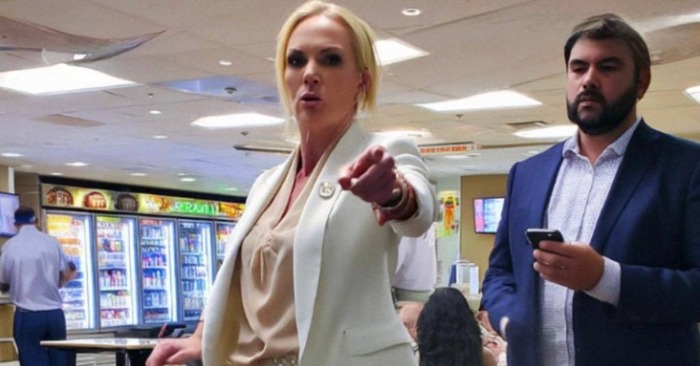
The voice was sharp, high-pitched, filled with disgust and impatience. I looked up. In the doorway of the cafeteria stood a tall woman, in a crisp white blazer and matching pants. She looked like she had stepped out of a magazine: perfect hair, perfect lipstick, immaculate nails. Her heels clicked sharply on the floor as she stormed in.
Behind her, a man in his fifties followed, dressed in a dark suit. He hadn’t even looked up from his phone. His thumb moved as if the world were just a screen.
The woman’s gaze fixed on me.
? YOU WORK HERE, RIGHT?
— You work here, right? — she asked as if giving me an order. — We’ve been waiting outside in the hallway for twenty minutes and no one came. Maybe if you weren’t stuffing your faces…
The cafeteria fell silent. Forks froze in mid-air. Conversations died in an instant.
I slowly stood up. The sandwich was still in my hand.
— I’m sorry, ma’am — I said, forcing my voice to stay calm. — I’m on my break right now, but I’ll find someone to help you immediately.
She narrowed her eyes and huffed, as if she had caught me in some crime.
— They’re all the same — she said loudly, so everyone could hear. — Lazy and rude. No wonder this place is falling apart.
My chest tightened. But I still tried to stay calm.
— I understand that you’re upset — I replied. — Just give me a moment…
SHE CROSSED HER ARMS AND LAUGHED.
She crossed her arms and laughed. Coldly, without joy.
— Of course you “understand.” I bet you enjoy making others wait. Finally, you get to feel important for once.
Her words cut so sharply that I had to steady myself for a moment. I clenched my fingers to stop them from shaking.
Then the man spoke, still leaning over his phone.
— Don’t be too hard on her — he grumbled. — She’s probably only doing this until she finds herself a husband.
My stomach churned. A few people glanced over, then quickly looked away, as if ashamed to be witnesses. A young resident from the pediatric ward seemed like he wanted to say something — but in the end, he didn’t.
I just stood there. The sandwich in my hand was already soggy, soaked by time and shame. I wanted to defend myself. I wanted to snap back. But something strange kept me rooted to the spot. A silence fell over the cafeteria. All eyes were on me, and yet no one spoke.
And then I saw him.
By the coffee machine, Dr. Richard stood up. He was in his early forties, tall, always well-groomed, and his voice was one you could hear even if he wasn’t shouting. Not only was he the head physician of the hospital, but he was also the kind of person everyone respected: fair, consistent, and intolerant of any nonsense.
He walked towards us slowly, with purposeful steps. The kind of walk that made people instinctively straighten up.
The woman noticed and lit up, as if the cavalry had finally arrived.
— Finally! — she snapped. — Maybe you can tell this lazy nurse to stop doing nothing and get back to work!
She looked at me with a satisfied grin, as if she had already won the match I hadn’t even been asked about.
Dr. Richard stood between us. I felt like I was holding my breath underwater. My stomach tightened: surely, I would be blamed. Maybe he thinks I broke a rule. Maybe he thinks I was disrespectful. The woman’s gaze was triumphant, and the man finally lifted his eyes from his phone — just to see the show.
— She’s sitting here doing nothing, — the woman rattled. — We’ve been waiting for twenty minutes! Outrageous! I don’t understand why people like this are even hired here!
I was just about to open my mouth to explain that I was on break and wasn’t even working at the level they were waiting for… but Dr. Richard gently raised his hand. Not commanding, more like a gesture of “enough.”
THEN HE LOOKED AT THEM. FOR A MOMENT, HE LOOKED AT ME TOO.
Then he looked at them. For a moment, he looked at me too. Then he looked back at them.
— I’ve heard what’s going on, — he said in a calm, steady voice. — And you’re right: this is outrageous.
The woman was already nodding, a smug smile appearing at the corner of her mouth.
But Dr. Richard continued:
— It’s outrageous that you think you can walk into my hospital and speak to any of my staff like this.
The woman’s smile vanished in that instant.
— W… what? — she stammered, blinking as if she didn’t understand the language.
Dr. Richard took half a step forward. His voice didn’t get louder, but the air around him seemed to change. Even the machines’ hum seemed quieter.
? THIS NURSE — HE WAVED TOWARDS ME WITHOUT TAKING HIS EYES OFF THEM — HAS BEEN WORKING HERE FOR TWELVE YEARS.
— This nurse — he waved towards me, without taking his eyes off them — has been working here for twelve years. She’s stayed in during snowstorms, taken over shifts without a word, and sat through nights with dying patients when their families couldn’t come. She’s missed birthdays, anniversaries, and holidays so that others could receive the care they needed.
The man started to shift uncomfortably. His phone was just hanging in his hand.
— She’s currently on her fifteen-minute break, — Dr. Richard continued. — A break she has more than earned. You may not understand how much nurses do here, but what I won’t tolerate is this kind of disrespectful tone. Not with her, and not with anyone else.
The cafeteria fell so silent you could have heard your own heartbeat.
Dr. Richard finished:
— She deserves respect. And an apology.
The woman’s mouth opened, as if she wanted to explain herself, but no sound came out. The man quickly looked away from everyone.
— Let’s go, — he grumbled, pulling the woman’s arm. — Let’s leave.
THE WOMAN TURNED SILENTLY WITH A RED FACE, HER HEELS NOW CLICKING NOT IN CHALLENGE BUT IN ESCAPE.
The woman turned silently, with a red face, her heels now clicking not in challenge but in escape. Without a word, they walked out.
Dr. Richard then turned to me. His face softened — barely noticeable, but just enough for me to feel that I wasn’t alone.
— Eat in peace, — he said softly. — You’ve earned it.
My throat tightened, but I was able to nod.
— Thank you, Doctor, — I whispered.
He looked at me one more time. Not with pity. Not theatrically. Simply… with respect. Then he turned and walked out, and his presence lingered in the air long after, like the silence after a storm.
I sat down. My legs were still shaking, the sandwich was a little soggy, but I didn’t care. I unwrapped it and took a bite. I swear, it was the best bite I had that day.
A few minutes later, a young nurse, Jenna, who had just recently joined the trauma department, walked over and gently touched my shoulder.
? THAT… WAS INCREDIBLE — SHE WHISPERED WITH BIG EYES.
— That… was incredible — she whispered with big eyes. — I wanted to say something, but… I didn’t know if it was okay.
— You don’t always have to speak up, — I said to her. — Just do your job. And always take your break.
She smiled, nodded, and walked away.
On the other side, Marcus from cardiology, who’s been working nights just as long as I have, raised his coffee cup towards me in a small gesture of respect. I smiled back.
That scene could have shattered me. Instead, it reminded me why I stay on this path, even when it gets ugly. Even when fatigue settles into my bones, and I miss Alice’s choir performance or school events.
We don’t do it for the praise. We do it because someone has to take care of people. Someone has to be there at three in the morning when a patient is shaking from fear. Someone has to listen when a family cries. Someone has to remind people that empathy is not a luxury.
That evening, when I finally got home, I was so tired I could barely take off my shoes. Alice was sitting on the couch in her favorite sweater, homework scattered in front of her.
— You’re really worn out, — she observed, jumping up.
? A LOT — I REPLIED, AS I SET MY BAG DOWN.
— A lot — I replied, as I set my bag down. — But something happened today.
She came after me into the kitchen. I took out the crumpled napkin from my bag that Alice had written in the morning and placed it in front of her on the table.
She looked at it and smiled.
— Do you see this? — I pointed to the little heart. — You really brought me luck today.
— What happened?
I took a big gulp of water, then told her: about the couple, the humiliation, the silence. And how Dr. Richard had heard it, and defended me in front of everyone.
Alice’s eyes widened.
— No way… really?
? REALLY — I LAUGHED TIREDLY.
— Really — I laughed tiredly. — You should have seen their faces.
Alice leaned her head on my shoulder.
— I’m proud of you.
I kissed her forehead.
— I’m proud of you too. And the sandwich… it was perfect.
— You ate, right?
— I didn’t forget this time.
She hugged me, and in that moment, the noise of the hospital, the bitterness of the day, all the exhaustion, quieted a little inside me. I was home. Safe. And for the first time in a long time… they saw me.
The next morning, I packed lunch for myself, but I put the napkin back in my bag. I didn’t care if it was “childish.” It reminded me why I do all of this.
Sometimes, a single kind word is really all it takes. One person standing up when others stay silent. And a tiny, hand-drawn heart on a napkin.
Alice looked at me from the kitchen door and just said:
— Don’t forget to eat, Mom.
I smiled and winked back.
— I won’t.