I found out my father had another family from a hospital wristband.

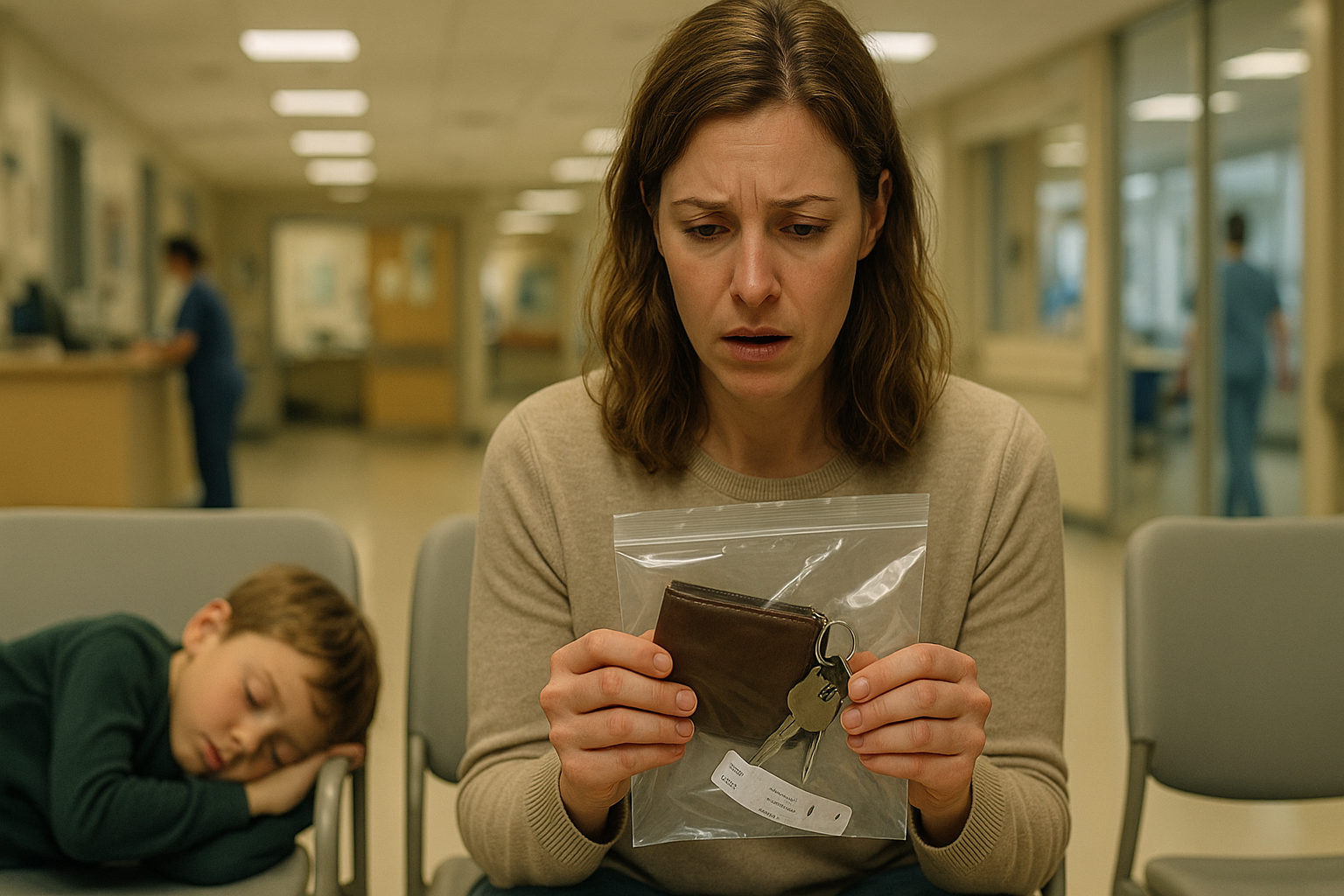
It was a Tuesday night. I was sitting on the cold plastic chair in the emergency room, holding my son Leo’s backpack and my phone with 3% battery.
My father, Mark, was behind the curtain. Heart attack, they said. Mild, but they wanted to keep him overnight.
My mother was on a business trip in another city. She kept calling every fifteen minutes, asking the same three questions: “Is he awake? Is he talking? What did the doctor say?”
At some point, a nurse came out and handed me a small transparent bag.
“His personal belongings,” she said. “You’re his daughter, right?”
I nodded. The bag had his watch, wallet, keys, and a crumpled white hospital wristband.
It took me a second to notice the writing. Name: Mark Wilson. Date of birth: correct. Emergency contact: Anna Wilson – Wife.
My mother’s name is Julia.
I thought maybe it was a mistake. A typo. Someone else’s wristband in his bag.
The nurse was already gone. Leo was asleep on two chairs pushed together, his jacket under his head.
I pulled the wristband closer. Address: not ours. A district in the same city, 30 minutes away.
I took a photo of it. My hands were shaking so much the first two pictures were blurry. The third one was clear.
I opened the messaging app and typed to my mother: “Did Dad ever live on Brookside Street?” I erased it before sending.
Instead I texted: “They’re keeping him overnight. You should maybe come tomorrow.”
She wrote back: “I’ll try to move my meeting. Kiss him from me.”
I put the phone face down and opened his wallet.
His ID, two credit cards, some cash. Behind a supermarket loyalty card, there was a small photo.
It was recent. My father, a woman I had never seen before, and a girl about six years old. The girl looked like Leo. Same chin, same eyes.
On the back, in his handwriting: “Anna & Emma – summer.”
I stared at the picture until the edges of my vision went blurry. My first thought was stupidly practical: he must have two wallets and mixed them up.
Then I saw our family photo still tucked in behind his driver’s license. Both lives in the same leather fold.
The curtain moved and a doctor called my name. I shoved everything back into the bag and stood up.
My father was pale but awake. Wires, beeping, the smell of antiseptic. He smiled when he saw Leo sleeping outside.
“You didn’t have to bring him,” he said quietly.
“We were at your place when Mom called,” I said. “It was closer to the hospital.”
His eyes flicked to the bag in my hands. Just for a second. It was enough.
I put the wristband on the bedside table. Carefully. Face up.
He looked at it, and his face changed in a way I had never seen.
“Who is Anna?” I asked. My voice sounded flat, like I was asking for the time.
For a moment he tried to play dumb. “What?”
I tapped the plastic. “Emergency contact. Wife. Anna Wilson.”
He closed his eyes. Long exhale. The heart monitor beeped steady and loud.
“I was going to tell you,” he said.
I almost laughed. “When? At your funeral?”
He flinched. He opened his eyes again, and they were wet.
“She’s… I married her ten years ago,” he said. “We have a daughter. Emma. She’s six.”
The numbers didn’t line up at first. Ten years ago, I was twenty-two. I was helping him and Mom pay off the mortgage. We were celebrating their silver wedding anniversary in a rented restaurant.
“Mom?” I asked.

He looked away.
“She doesn’t know,” he said.
The room got very quiet. Even the beeping felt far.
“So you have two wives,” I said. “Two families. Same last name. Same city.”
He nodded once. No excuses. No story about falling out of love. Nothing.
“I didn’t plan it,” he said finally. “It just… happened. And then it got too big. I couldn’t fix it without destroying everything.”
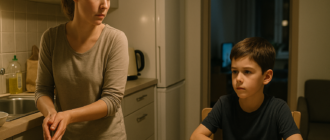
I thought about my mother, alone in a hotel room with a suitcase half-open, checking her phone every few minutes.
I thought about this other woman, Anna, probably putting a child to bed, maybe telling her, “Daddy is working late.”
“Does she know about us?” I asked.
“Yes,” he said. “She knows I’m still married. She thinks your mother knows too. That it’s… complicated.”
I sat down on the chair. My legs felt hollow.
“How many birthdays did you miss because you were with them?” I asked.
He didn’t answer. He didn’t have to. I started counting in my head. The business trips. The sudden call-outs. The Christmas he “got stuck at the airport.”
The nurse came in to adjust his IV. She glanced at my face, then at his, and left without saying anything.
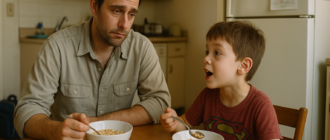
“Leo doesn’t know,” I said. “To him you’re just Grandpa who sometimes can’t come.”
He covered his eyes with his hand. He looked old. Smaller. Not like my father, just like a tired man in a hospital bed.
“I’m sorry,” he whispered.
I believed that he was sorry. It didn’t help.
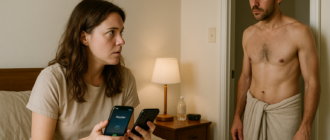
Outside, my phone buzzed. A message from Mom: a photo of the boarding pass for the first flight back in the morning. “Tell him to wait for me,” she wrote.
I showed him the screen. He read it slowly.
“You’re going to tell her,” I said. It wasn’t a question.
He nodded, but I didn’t care if he agreed.
“If you don’t,” I added, “I will. Tomorrow. When she gets here.”
He looked at me like a man standing at the edge of a cliff.
“I’ll tell her,” he said. “You shouldn’t have to carry this.”
But he had already handed it to me, in a plastic bag with his keys and his watch.
At 3 a.m., I signed the overnight forms. The receptionist asked for my relationship to the patient.
“Daughter,” I said. The word felt different now. He wasn’t less my father. He was just not the person I thought he was.
Leo woke up when I picked up his backpack. “Is Grandpa okay?” he mumbled.
“He will be,” I said. It was technically true.
We took a taxi home. The city was empty, the streetlights too bright.
At a red light, I opened the photo again. My father, the other woman, the little girl.
I created a new album on my phone and named it simply: “Evidence.” I moved the picture and the wristband photo inside.
Then I turned off the screen and put the phone face down on my lap.
In the morning, my mother’s plane would land. She would go straight from the airport to the hospital.
By then, all three of us would know the same story.
It wouldn’t fix anything.
But at least we would be living in the same reality.