Every small town has its strange little landmarks. In ours, it was the historical museum. Tucked between the library and the courthouse, it was the kind of place most people forgot about — except on school field trips or rainy afternoons.
Most of the displays were dull: antique farm tools, yellowed newspapers, a case full of arrowheads. But there was one item that everyone remembered.
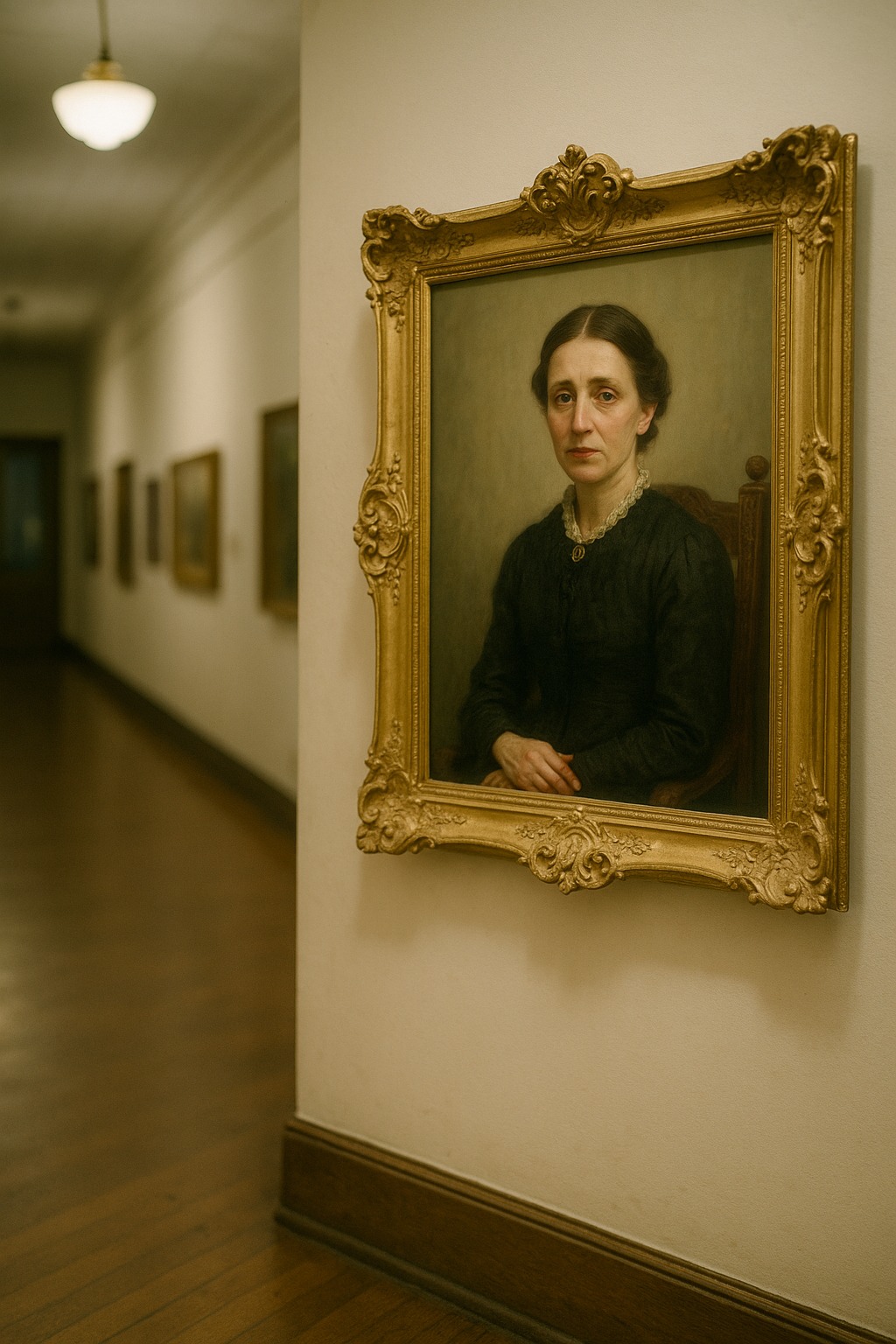
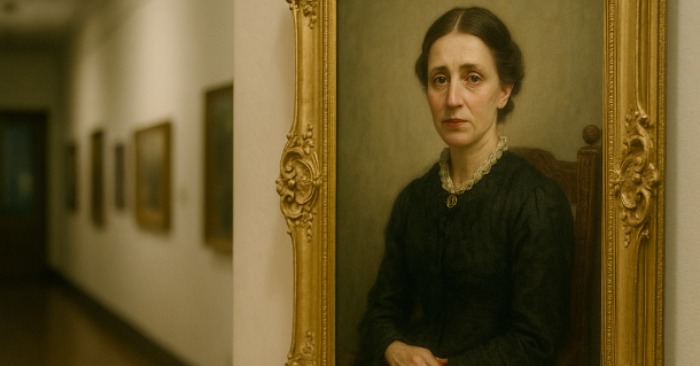
It hung at the very back of the main hall, in a heavy gold frame. A Victorian woman, painted in muted oils, sat in a high-backed chair, hands folded neatly in her lap. She wore a black dress with lace at the collar, and a small brooch glinted at her throat.
There was nothing remarkable about her. No artist’s name, no plaque beyond the simple inscription: “Donated, 1892.”
Just a woman in a chair. Harmless. Ordinary.
It was Harold, the night janitor, who first noticed.
He’d worked at the museum for nearly twenty years, pushing his mop down the same halls, wiping the same glass cases. One night, while polishing the floor beneath the portrait, he glanced up and froze.
The woman was smiling. Just faintly, the corners of her mouth curved upward.
Harold shook his head. Fatigue, he thought. Shadows. But the next night, when he passed again, her smile was gone. Her eyes glistened, shimmering as though filled with tears.
From then on, he checked her nightly. Each time, the expression had changed. A smirk. A frown. A face that seemed weary, or pleading, or amused.
He told his supervisor. She laughed. “Harold, you’ve been working too many night shifts.”
But Harold swore he wasn’t imagining it.
Weeks later, he arrived one morning and dropped his keys with a clatter.
The portrait was empty.
The chair remained, painted in precise detail. But the woman was gone. No figure, no folded hands, no brooch. Just an ornate wooden chair on a blank backdrop.
The museum director ordered the exhibit covered immediately. “It’s vandalism,” he insisted. “Someone tampered with it.” But the canvas showed no cuts, no brushstrokes. The paint was seamless, as if the woman had never been there at all.
By noon, the doors were locked. The museum never reopened.
The story spread quickly through town. Children dared each other to run past the museum at night. Teenagers swore they saw her pale face peering from the windows. One man claimed he heard soft weeping when he walked his dog past the building.
But the strangest reports came from those who lingered too long. They said if you stood by the glass at midnight, you might see her reflection — not in the frame, but in your own.
Always watching. Always choosing.
I was skeptical. Stories like these always get exaggerated. But curiosity gnawed at me. One cold autumn night, I walked down Main Street just before midnight, the museum looming dark and silent.
I stopped at the glass doors and peered inside. The faint glow of the streetlamp lit the covered frame at the back of the hall. Nothing unusual.
Then the glass chilled beneath my fingertips.
Her face appeared beside mine in the reflection. Not painted, not framed. Just her pale eyes staring directly into mine, her mouth curved in the faintest, knowing smile.
I staggered back. By the time I looked again, the reflection was gone.
Months later, while renovations were being discussed, the city clerk found a letter in the archives. Dated 1892, it had been tucked into the original donation file.
The note, written in delicate cursive, read:
“She asked to be remembered. She would not sit for the artist unless he promised. As long as her image is displayed, she will remain. If it is ever hidden… she will walk again.”
To this day, the museum remains sealed. The windows are boarded, the doors chained. Tourists sometimes ask why such a quaint town keeps a closed museum at its center. Locals just shrug.
But some nights, if you dare to walk past the building around midnight, you’ll see what Harold swore he saw:
Her face in the glass. Watching. Waiting.
And if you’re unlucky enough — she just might notice you.