It began as a renovation project.
When Clara decided to restore her great-grandmother’s old countryside house, she expected dust, creaky floors, and maybe a few forgotten trinkets in the attic. She didn’t expect to find a sealed envelope hidden under a loose wooden board in the living room wall.
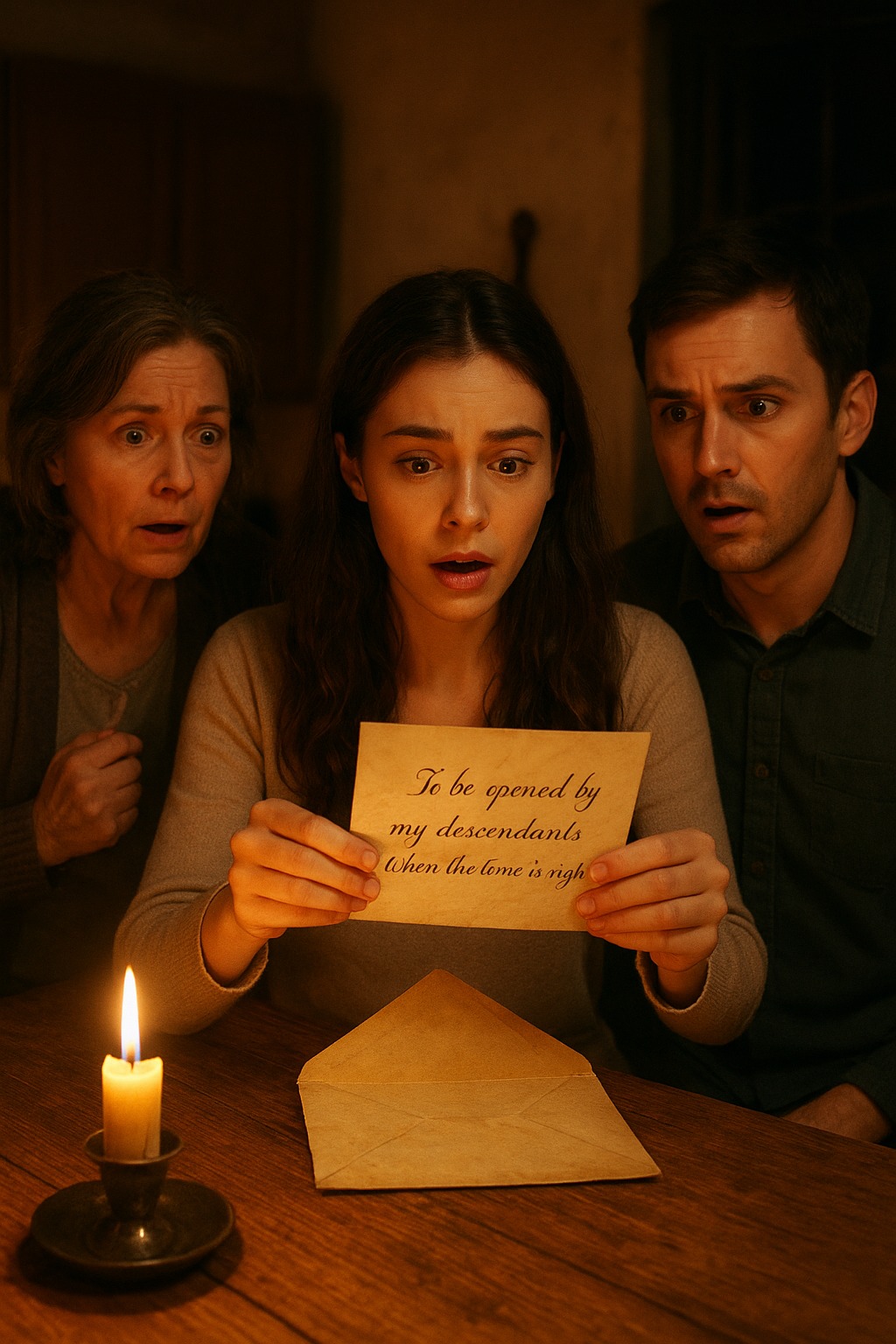
The envelope was yellowed, the paper brittle, the handwriting elegant but shaky. It was dated August 1915 — in the middle of the First World War. Her hands trembled as she picked it up. On the front was written: “To be opened by my descendants when the time is right.”
Clara laughed nervously. “What does that even mean?” she thought. But deep down, something told her this letter carried weight far heavier than a simple family note.
That evening, she sat at the kitchen table with her mother and brother. Together, they carefully tore the envelope open. Inside was a neatly folded piece of paper, its ink still surprisingly legible after more than a century.
The first line made them gasp:
“If you are reading this, then the secret I have carried for years can finally be told.”
The letter was written by Clara’s great-great-grandfather, Alexander, a man the family only knew from faded photographs and brief mentions in stories. He had fought in the First World War but never returned. The official record said he “disappeared in action.”
But the letter revealed a completely different truth.
Alexander confessed that during the war, he had deserted. Horrified by the endless bloodshed and haunted by the death of his younger brother in the trenches, he couldn’t bear to stay. One night, under cover of darkness, he abandoned his unit and fled. For months he lived in hiding, moving from village to village, ashamed and terrified of being discovered.
The shocking part? He never died in the war. Instead, he assumed a new identity, remarried, and started a second family in another country. The man who Clara’s family had mourned for generations had, in fact, chosen to vanish from their lives.
At the end of the letter, Alexander wrote:
“I do not ask for forgiveness. I only ask that you remember me not as a coward, but as a man who could no longer bear the cruelty of war. Perhaps one day, when the world is gentler, you will understand.”
Clara’s mother burst into tears. For years, the family had carried the pain of a tragic war hero’s death. Now they had to confront a new reality: he hadn’t died a hero at all — he had lived as a deserter, a man divided between two families, two worlds.
The revelation shook them. Was he a coward for abandoning his duty and his first family? Or was he simply human — broken by the horrors of war?
Clara folded the letter back into its fragile envelope and stared at the candle flickering on the table. For the first time, she realized that history isn’t just dates and battles; it’s people, with all their fears, weaknesses, and impossible choices.
The Moral
Sometimes the past we glorify hides uncomfortable truths. But every secret, no matter how heavy, has the power to change how we see not just history — but ourselves.