My husband’s second family lived thirteen minutes away.

I found out because of a phone charger.
On a Tuesday evening, Mark came home without his usual backpack. He said he forgot it at work. Later, he asked to borrow my charger. I went to his car to get my own and saw his “forgotten” backpack on the back seat.
It was open, like someone had searched it in a hurry.
Inside was a small pink hair clip and a folded receipt from a supermarket in a part of town we never go to. On the receipt: baby formula, diapers, wet wipes. The name on the loyalty card line said: “Lena W.” Our last name.
We don’t have a baby. Our daughter Emma is ten.
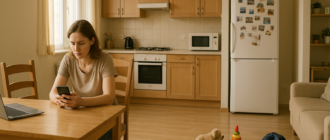
I took a photo of the receipt and put everything back exactly as it was. When I came home, Mark was on the couch, laughing at something on his phone. I watched him for a long time before I could make myself speak.
I asked where he really left the backpack. He didn’t look up, just said, “At the office, I told you.”
That night, when he fell asleep, I checked his car mileage in the service app. The last trip was to an address in a neighborhood near the supermarket from the receipt. The time matched the date.
The next day, I told my boss I needed to leave early. I entered the address into my GPS. Thirteen minutes from our apartment.
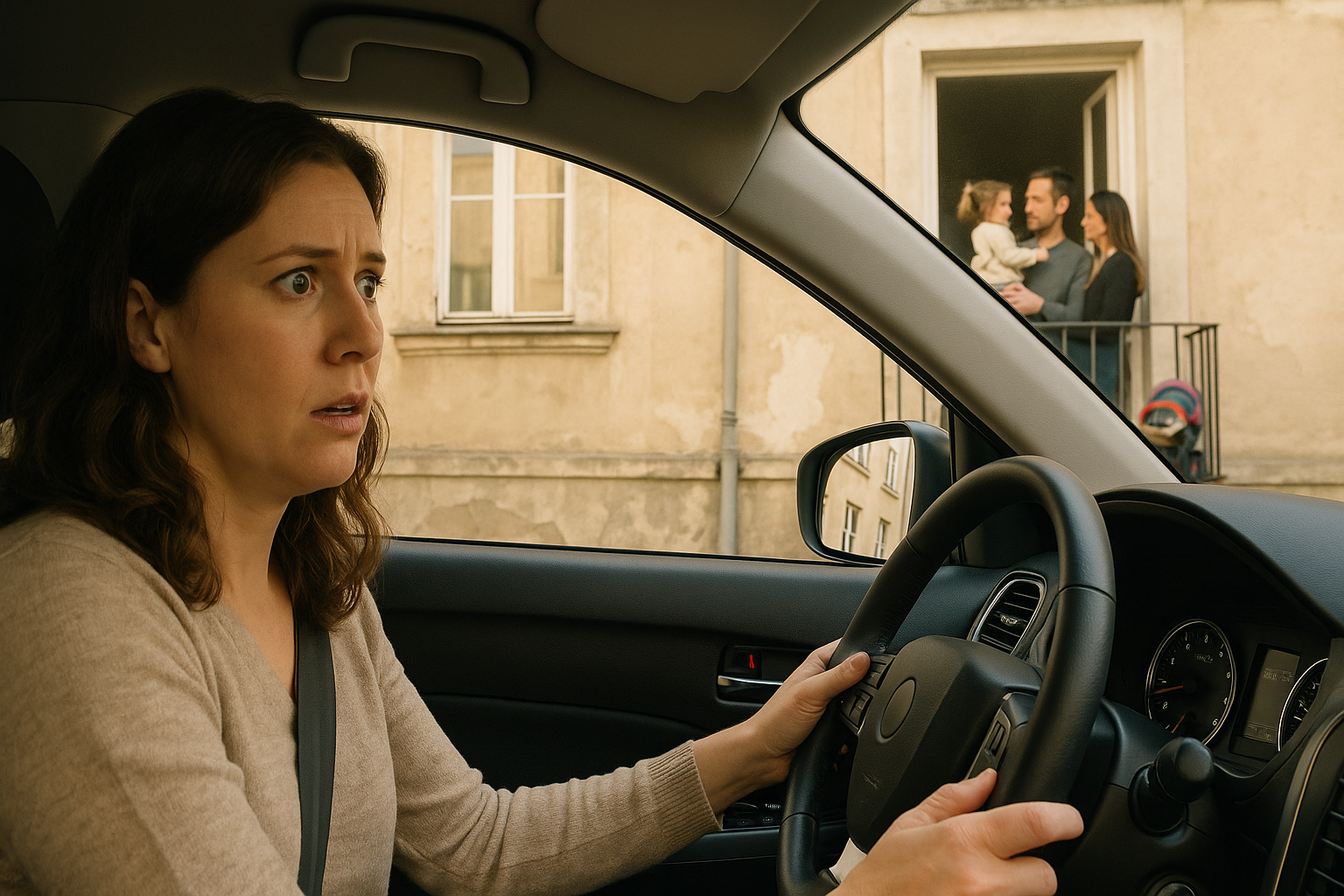
The building was an old three-story house. On the second floor balcony, there was a small plastic bike and a pink jacket hanging on a chair. I waited in the car for almost an hour, feeling stupid and dramatic.
Then Mark’s car turned the corner.
He parked, took a grocery bag from the trunk, and walked into the building like he’d done it a hundred times. No hesitation, no checking his phone, no looking around.
I didn’t follow him. I just sat there, gripping the steering wheel until my hands hurt. After twenty minutes, I saw him through a window on the second floor.
He was holding a little girl.
She looked about two. Dark hair like his. She touched his face with both hands. He smiled in a way I hadn’t seen in years.
A woman came up behind them. She was barefoot, in a simple T-shirt and leggings, hair in a messy bun. She leaned on the doorframe, watching them. She said something. He turned and kissed the top of her head quickly, like it was a habit.
I realized my breathing was too loud inside the car.
When he finally left, almost two hours later, I followed him home. He bought flowers on the way and walked into our apartment with the same hands that had just held that child.
He gave Emma the flowers, joked that she was “his little princess” and asked what she wanted for dinner. I watched them from the kitchen doorway, the image from the other window still in my head.
After Emma went to her room, I put the receipt on the table in front of him.
He stared at it for a long time. Then he didn’t ask where I got it. He just closed his eyes and exhaled like someone who had been running and decided to stop.
The story came out in broken pieces.

Her name is Anna. They met at a conference four years ago. It “wasn’t supposed to be serious.” Then she got pregnant. He says he panicked. He says he tried to end it, but when the baby was born, he couldn’t walk away.
The girl’s name is Mia.
He said he didn’t tell me because he “didn’t want to lose” us. He said it like it was a reason, not a choice he made every single day for two years.
I asked how often he saw them. He said twice a week. Sometimes three. Weekends “when there’s a good excuse.” Business trips, late meetings, traffic jams.
All the nights I sat with Emma doing homework alone, all the times he texted, “Sorry, running late,” he was there.
He had two lives, and I was the one with the schedule that adjusted.
The next morning, I took Emma to school and then drove back to that building. I rang the bell with shaking hands.
Anna opened the door. She knew who I was without asking. I could tell by how her face changed, how she straightened her T-shirt, how she moved her body a little to block the hallway.
Mia appeared behind her, holding a stuffed rabbit by its ear.
We stood there, three adults and one child, in a narrow hallway that smelled like boiled potatoes and laundry detergent.
I asked a single question: “Did you know about us?”
She said yes.
Her voice didn’t shake. She knew my name, my job, Emma’s age. She said she thought I knew too, that I just “accepted it,” because, “Men do this. It’s normal.”
She said it quietly, without hate. More like she was describing the weather.
On the drive home, I realized I wasn’t special in any of their stories. Not in his, not in hers.
That evening, I told Mark he had to leave.
He didn’t shout, didn’t beg. He only asked if he could put Emma to bed “one last time like normal.” He read her a chapter of her book, turned off the light, closed her door, and then packed a small suitcase.
He moved in with them two days later.
Now my life is divided into “before the receipt” and “after the receipt.” Emma thinks her dad got a new job and had to move closer to work. She counts the days between his visits.
Sometimes, when I drive past that part of town, I see a little girl on a plastic bike near the old house. I don’t stop the car. I don’t slow down.
There are four of us in this story, and none of us chose the same thing.